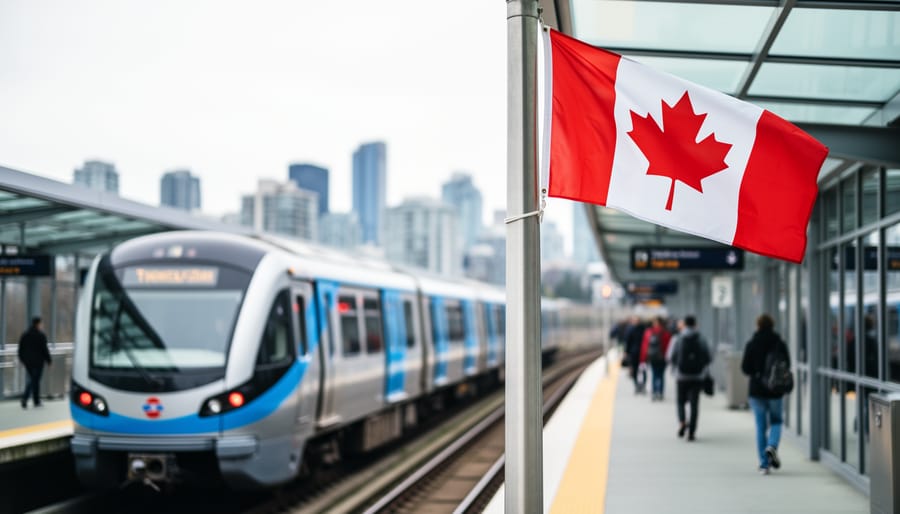
Check online auction sites and community Facebook groups daily for announcements about upcoming liquidation events, as these sales often pop up with just 48-72 hours’ notice following insurance settlements from a fire damage property sale. Arrive early—seriously, like an hour before opening—because the best undamaged items disappear within the first thirty minutes, and savvy shoppers know exactly what they’re hunting for.
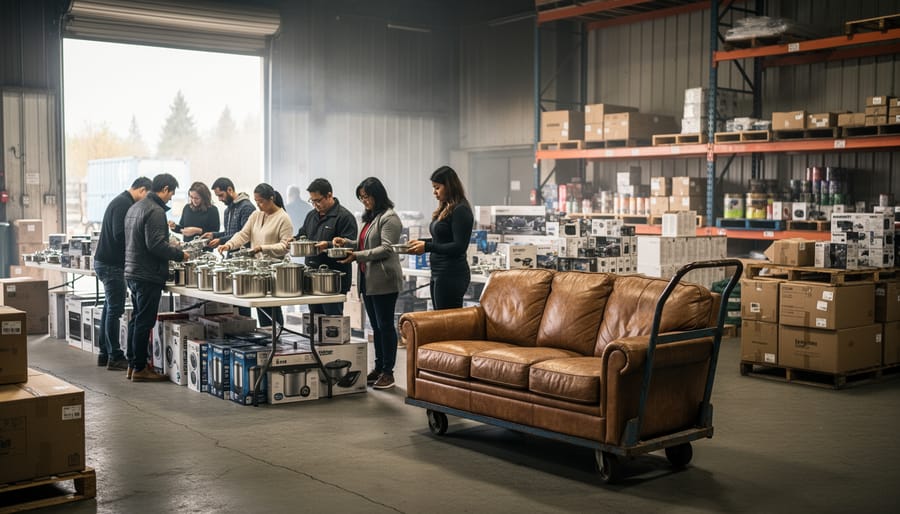
Expect smoky smells and cosmetic damage on most items, but don’t let that deter you from incredible savings of 60-90% off retail prices. I once scored a barely-singed leather couch for $85 that just needed airing out for a week. Bring cash, wear clothes you don’t mind getting dirty, and pack your own boxes or bags since these venues rarely provide packaging materials.
Focus on non-porous items like metal cookware, tools, sealed electronics, and furniture with removable covers that can be professionally cleaned. Avoid porous materials like mattresses, unsealed food items, or children’s plush toys that might harbor smoke particles. These sales represent some of the best deals in Vancouver if you know what to look for and understand that all sales are final.
Inspect everything carefully before purchasing—test electronics if possible, check furniture joints, and ask questions about the extent of fire versus smoke damage. Smart shoppers treat these events as treasure hunts rather than traditional shopping experiences, and that mindset makes all the difference.
What Makes Fire-Damaged Sales Different from Regular Liquidations
Here’s the thing about fire-damaged sales that surprises most first-timers: the vast majority of items haven’t actually touched flames. I learned this on my first visit to a fire sale in Richmond, where I expected everything to look charred and ruined. Instead, I found perfectly usable goods that simply smelled a bit smoky.
The real story behind most fire-damaged merchandise is smoke exposure and water damage from sprinkler systems. When a warehouse or retail space experiences a fire, insurance companies often write off entire inventories, even items stored far from the actual blaze. A small electrical fire in one corner can render an entire stock “unsellable” through traditional retail channels, even though most products remain functionally perfect.
This is where the dramatic price reductions come from. Regular liquidation sales typically offer 20-40% off because stores are simply clearing excess inventory or going out of business with merchandise in pristine condition. Fire-damaged sales slash prices by 60-90% because retailers can’t legally sell smoke-affected items as “new,” and insurance settlements have already covered their losses.
What does “fire damaged” actually mean for shoppers? Expect varying conditions even within the same sale. Some items might have light smoke odor that disappears after airing out. Others could have water-stained packaging but perfectly intact contents inside. Occasionally, you’ll find items with actual heat damage or soot residue, though these are usually clearly marked and priced accordingly.
The insider tip I wish someone had shared with me earlier: bring plastic bags or containers for your purchases. Many fire sales don’t provide shopping bags, and you’ll want to contain that smoky smell during your trip home. Also, know that most items are genuinely salvageable. I’ve bought kitchen gadgets, tools, and sealed packaged goods that worked flawlessly after a quick wipe-down. The discounts are real because the damage is technical and cosmetic rather than functional.
Where to Find Fire-Damaged and Liquidation Sales in Metro Vancouver
Permanent Salvage and Liquidation Stores
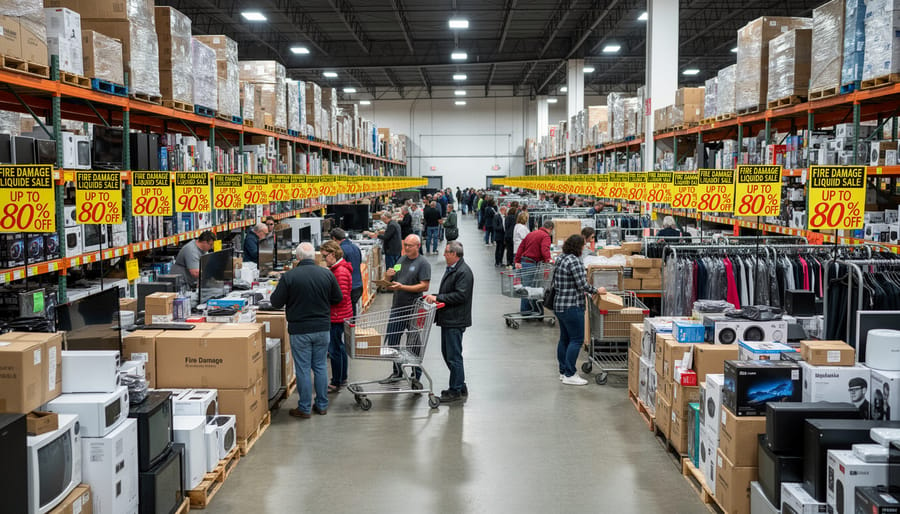
Vancouver has several permanent salvage and liquidation retailers where fire-damaged goods and overstock merchandise find a second life. These aren’t your typical weekend pop-up sales—they’re established stores with regular hours and constantly rotating inventory.
In the Richmond area, you’ll find several warehouse-style liquidation centers along River Road and in the industrial zones near the airport. These spots typically stock everything from slightly smoke-scented linens and furniture to perfectly fine electronics that were simply in the same shipment as damaged goods. I’ve discovered that visiting mid-week, especially Tuesday or Wednesday mornings, gives you first dibs on newly arrived pallets before the weekend crowds descend.
The Burnaby-New Westminster corridor hosts a handful of salvage retailers that specialize in building materials, appliances, and home goods. One insider tip: strike up a conversation with the staff. They often know when the next big shipment is arriving and what’s in it. I once learned about an incoming delivery of designer cookware—all functional but with discolored packaging from warehouse smoke—and scored incredible deals by showing up the day it hit the floor.
Most of these permanent locations are straightforward about their merchandise origins. You’ll see clear signage indicating whether items are fire-damaged, overstock, or customer returns. Prices typically run 40-80% below retail, with the deepest discounts on items with cosmetic issues. Pro tip: bring hand sanitizer and wear clothes you don’t mind getting dusty—these warehouse environments aren’t glamorous, but the treasure hunt is part of the adventure.
How to Track Pop-Up Fire-Damaged Sales
Finding fire-damaged sales requires a bit of detective work, but trust me, it’s worth the effort. These pop-up events often happen quickly after an incident, sometimes within days or weeks, so staying plugged into the right information sources is key.
Your best starting point is Facebook Marketplace and local buy-and-sell groups like “Vancouver Buy and Sell” or “Metro Vancouver Deals.” Insurance companies and business owners often post announcements there first since they reach thousands of people instantly. I joined about five different Vancouver-area groups, and my phone now pings whenever someone posts about liquidations. That’s actually how I scored an incredible find last summer—a gorgeous leather jacket with just the faintest smoke smell for $25. After one trip to the dry cleaner, it looked brand new and easily worth $300.
Craigslist Vancouver still gets regular postings under the “garage sales” and “general for sale” sections. Search terms like “fire sale,” “smoke damage,” “insurance liquidation,” or “salvage” work well. Set up email alerts for these keywords so you don’t miss anything.
Local community forums like Reddit’s r/vancouver occasionally feature posts about upcoming sales, and users often share insider tips about which sales are actually worth visiting. The Vancouver Is Awesome website sometimes covers larger liquidation events in their news section too.
Drive around industrial areas in Richmond, Burnaby, and Surrey—you’ll sometimes spot handwritten signs announcing warehouse sales that never make it online. Keep an eye on local news reports about commercial fires as well. When a business announces plans to reopen after fire damage, that’s your cue to watch for liquidation announcements in the following weeks.
The key is persistence and quick action once you spot an opportunity.
What You Can Actually Find (And What’s Worth Buying)
Best Bargains to Hunt For
Here’s the treasure hunter’s secret: while fire-damaged sales might sound intimidating, many items emerge virtually unscathed and deeply discounted. Professional resellers know that certain products are goldmines at these events, and you can use their strategies to score incredible finds alongside your regular Vancouver shopping deals.
Tools and hardware top every savvy shopper’s list. Wrenches, screwdrivers, and power tools in sealed packaging typically survive smoke exposure without functional damage. I once watched a contractor fill an entire cart with brand-new power drills at 70% off, and they worked perfectly after a simple wipe-down.
Sealed packaged goods are another winner. Items like light bulbs, batteries, cleaning supplies, and personal care products in unopened containers remain perfectly usable. The packaging might smell smoky initially, but airing them out for a day or two usually solves that.
Small appliances often receive significant discounts despite minimal damage. Coffee makers, toasters, and blenders sealed in boxes frequently need nothing more than exterior cleaning. Check that seals are intact and mechanisms move freely.
Furniture, particularly solid wood pieces, can be refinished beautifully. Professional flippers specifically hunt for quality hardwood items that just need surface treatment. Metal shelving, filing cabinets, and outdoor furniture also clean up remarkably well.
The insider tip? Arrive early for best selection, but return near closing time when sellers become more negotiable on pricing.
What to Skip
Let me share some hard-earned wisdom from years of hitting these sales: not everything is a bargain, even when it’s 80% off. Some items simply can’t shake their smoky past, no matter how much you air them out or how desperate you are for a deal.
Upholstered furniture and mattresses top my “walk on by” list. That smoke smell embeds itself deep into foam and fabric, and you’ll smell it every single time you sit down or go to bed. I once bought a gorgeous armchair for $30, thinking I could salvage it—three months and countless cleanings later, I donated it. Trust me, your nose (and your guests) will thank you for skipping these items entirely.
Clothing, bedding, and fabric goods fall into the same category. Even professional cleaning can’t always remove that persistent odor from textiles. The exception? Items you can fully dismantle and machine wash multiple times, like canvas bags or sturdy cotton curtains. But anything dry-clean only? Hard pass.
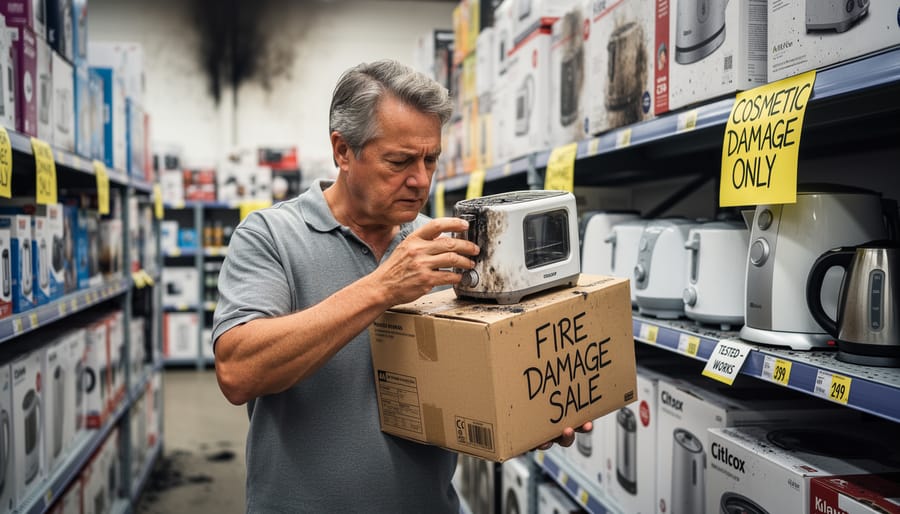
Electronics with visible smoke damage or that acrid electrical smell should stay on the shelf. Fire-compromised wiring is a genuine safety hazard, and that $15 toaster isn’t worth a house fire. Stick to sealed electronics or items where you can verify they weren’t directly exposed to smoke.
Finally, skip anything that touches your face or food directly—cosmetics, opened personal care items, and kitchen items with porous surfaces. Some deals just aren’t worth the health risk, regardless of the discount.
Smart Shopping Strategies for Fire-Damaged Sales
Arrive Early (But Not Too Early)
I learned this lesson the hard way at my first liquidation sale near Main Street. I showed up 30 minutes before opening and found myself in a crowd of 50+ experienced bargain hunters who’d been waiting since dawn. The doors opened, and it was chaos—I barely got through the entrance before the best items disappeared.
Here’s what works better: arrive about 15 minutes before the posted opening time. You’ll get a decent spot in line without sacrificing your entire morning, and you’ll still have access to quality finds. The real pros do camp out early for major sales, but honestly, most Vancouver liquidation events get restocked throughout the day as organizers bring items from storage areas.
For fire-damaged sales specifically, timing matters differently. Since smoke-affected items need inspection anyway, the mad rush isn’t always worth it. I’ve found excellent deals arriving an hour after opening when the crowd thins and you can actually examine products properly without getting elbowed aside.
Weekend sales tend to be busiest between 10am and noon, so if you’re flexible, try early afternoon. You’ll miss some inventory but gain breathing room and better opportunities to negotiate on remaining items.
What to Bring and How to Inspect Items
Come prepared, and you’ll shop smarter at these unique sales. I learned this the hard way during my first salvage sale visit when I discovered a perfect-looking blender only to realize I had no way to test it—and the store had no power outlets available for customers.
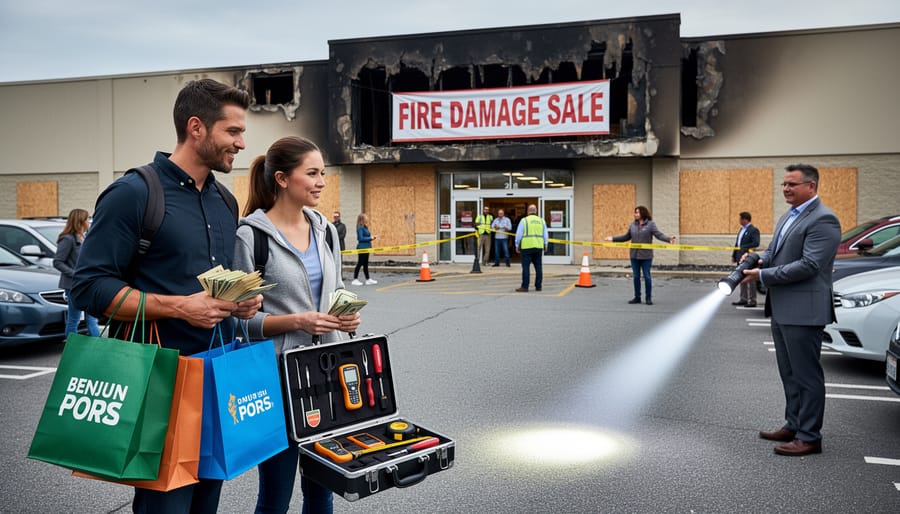
Cash is king at most liquidation sales, though some venues now accept debit cards. Bring smaller bills since change can be limited. Reusable shopping bags are essential—lots of them. Items often come without packaging, and you’ll appreciate having sturdy bags when carrying home your treasures.
A flashlight or your phone’s flashlight function is surprisingly useful. Warehouse spaces can have dim corners, and you’ll want to inspect items closely. Speaking of inspection, bring reading glasses if you need them for checking labels and product details.
Now for the inspection itself: differentiate between cosmetic and functional damage. Smoke smell is common—open drawers, sniff fabric items, and check inside appliances. Sometimes a good airing out works wonders; other times, the smell is permanent. For clothing and textiles, examine seams and zippers beyond just surface staining.
Electronics deserve extra attention. Check for water damage indicators, corrosion on battery compartments, and physical cracks. Ask if there’s a testing station available—some sales allow basic plug-in tests. If not, understand you’re buying as-is.
Inspect furniture joints by gently wiggling pieces. Check drawer slides and door hinges. Minor scratches and dents are superficial; structural weakness is a deal-breaker. When in doubt, ask staff about the item’s history and return policies before committing.
Understanding Your Rights and Return Policies
Here’s something I learned the hard way at my first liquidation sale: those “Final Sale” signs aren’t just decoration. When you’re shopping fire-damaged goods in Vancouver, you’re entering a world where the usual consumer safety nets look a bit different.
Most liquidation and salvage sales operate on strict “as-is, where-is” policies. This means what you see is exactly what you get, and returns are typically off the table. I once bought a set of kitchen tools that looked perfect until I got home and noticed subtle smoke odor—lesson learned. These retailers are transparent about this upfront because they’re selling goods at rock-bottom prices precisely because of their compromised condition.
That said, you’re not completely without protection. BC’s Business Practices and Consumer Protection Act still applies, even at liquidation sales. Sellers can’t misrepresent products or engage in deceptive practices. If something’s advertised as “smoke-damaged packaging only” but arrives structurally damaged, you have grounds to speak up.
The trade-off is straightforward: you’re accepting higher risk for significantly lower prices. Think of it as a calculated gamble rather than traditional shopping. Before buying, inspect everything thoroughly. Ask questions. Check for smoke smell, water damage, or structural issues. Most liquidation staff are surprisingly helpful when you show genuine interest.
My insider tip? Take photos of items before purchasing, especially electronics or anything you can’t immediately test. Some vendors offer limited exchange policies if you discover issues within 24 hours, but only if you can prove the item’s condition at purchase.
The bottom line: these sales reward careful shoppers who understand they’re trading conventional consumer protections for exceptional value.
Whether you’re visiting Vancouver on a rainy afternoon looking for indoor activities or you’re a local seeking budget-friendly finds, liquidation and salvage sales offer a genuine treasure-hunting experience you won’t find in typical tourist guides. I’ve walked away from these sales with everything from designer kitchenware at 70% off to perfectly functional electronics with minor cosmetic flaws—and the thrill of the hunt never gets old.
The key is approaching these sales with realistic expectations and a flexible mindset. Not every item will be pristine, and you’ll need to invest time sifting through merchandise, but that’s precisely what makes discovering a hidden gem so rewarding. Bring cash when possible, inspect items carefully, and don’t hesitate to ask questions about return policies.
These sales represent one of Vancouver’s most authentic Vancouver experiences—a shopping adventure where savvy locals have been scoring deals for years. So grab a reusable bag, wear comfortable shoes, and prepare to uncover some unexpected bargains while experiencing a uniquely practical side of the city.