Kluane National Park sits in Canada’s Yukon territory, home to the country’s highest peak and the world’s largest non-polar ice field. For travelers based in or visiting Metro Vancouver, getting here requires real commitment: you’re looking at roughly 1,600 kilometers and either a multi-day road trip up the Alaska Highway or a flight to Whitehorse followed by a two-hour drive west. But those who make the journey discover something truly extraordinary, a wilderness so vast and untouched it feels like stepping onto another planet.
I’ll be honest: this isn’t a weekend getaway from the Vancouver outdoor playground. Kluane demands time, proper planning, and a genuine appetite for backcountry adventure. The park spans over 22,000 square kilometers of glacier-carved valleys, turquoise lakes, and grizzly bear habitat. Most of the terrain is remote backcountry accessible only on foot, and current regulations in 2026 require mandatory registration and permits for backcountry camping, along with bear-resistant food containers.
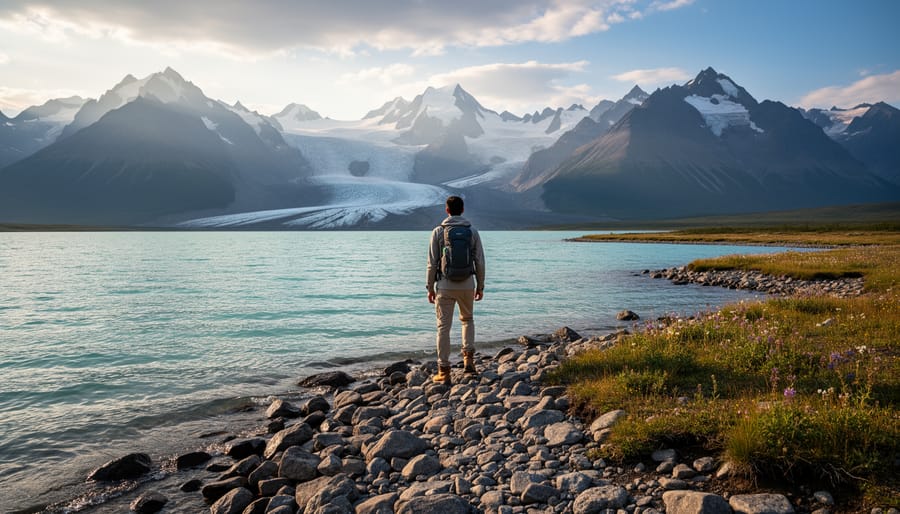
What makes Kluane worth the effort? Picture standing at the edge of Kluane Lake as the light shifts across the St. Elias Mountains, or hiking through wildflower meadows knowing you might be the only person for miles. The park protects critical wildlife corridors and some of North America’s most pristine alpine ecosystems. Several areas face seasonal closures and restrictions, including a fire ban in the Slims Valley area and temporary closures around Thechàl Dhâl’, so checking current conditions before you finalize plans is essential. This is wilderness travel at its most authentic, and it’s not for everyone. But if you’ve been craving an escape that feels truly remote, Kluane delivers.
What Makes Kluane National Park Special
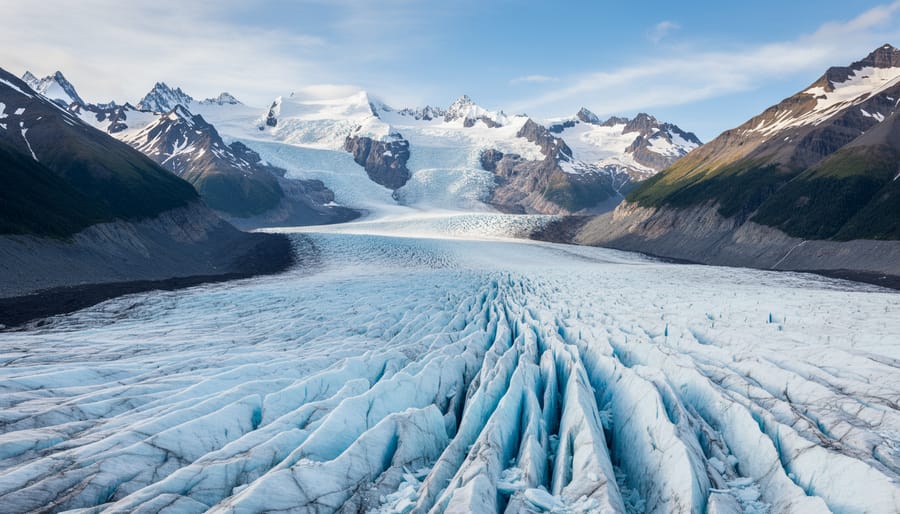
Kluane exists on a scale that defies comparison to anything you’ll find in your typical BC national parks guide. Picture this: a wilderness so vast that it holds icefields stretching beyond the horizon, mountains that scrape the upper atmosphere, and valleys where grizzlies outnumber people by considerable margins. The park protects roughly 22,000 square kilometers of southwestern Yukon, making it larger than several small countries.
What sets Kluane apart is its membership in the Kluane/Wrangell-St. Elias/Glacier Bay/Tatshenshini-Alsek UNESCO World Heritage Site, a designation it shares with adjacent protected areas in Alaska. Together, these parks create the planet’s most extensive protected mountain ecosystem. The icefields here rival anything outside the poles, feeding glaciers that carve through valleys in slow-motion rivers of blue ice.
The peaks dominating Kluane’s horizon include Canada’s tallest mountains, a spine of summits that challenges even elite mountaineers. These aren’t peaks you day-hike; they’re serious alpine objectives requiring expedition-level planning. For most visitors, the sheer scale becomes comprehensible only from the air, where the landscape reveals itself as an ocean of ice and rock stretching to every horizon.
This is wilderness in its truest sense. Unlike southern parks where you’re never far from a road, Kluane’s backcountry extends for days in every direction. The park harbors healthy populations of grizzlies, Dall sheep, and caribou, species that thrive precisely because human presence remains minimal. It’s Canada’s wild heart, uncompromising and magnificent.
Getting There from Metro Vancouver
The Fly-and-Drive Option
Most Vancouver travelers I’ve spoken with take the fly-and-drive route, it’s practical and cuts days off your trip. You’ll book a direct flight from YVR to Whitehorse (they run year-round), then rent a vehicle at the airport. The drive west to Haines Junction takes a couple of hours along the Alaska Highway, passing through boreal forest and increasingly dramatic mountain views.
Here’s what that looks like in practice: you land mid-morning, grab your rental, stock up on supplies in Whitehorse if needed, and you’re standing at Kathleen Lake by early afternoon. Unlike trying to get around without a car in other parks, Kluane requires your own wheels, there’s no transit infrastructure once you leave Whitehorse.
I’ve found this approach gives you flexibility. You can base yourself in Haines Junction for a few days, explore the accessible trails and visitor centre, then return to Whitehorse before your flight home. It compresses the commitment to perhaps five days total while still giving you genuine Kluane time rather than spending half your trip on pavement.
The Epic Road Trip Route
Driving from Metro Vancouver to Kluane takes commitment. You’re looking at a solid three to four days of travel each way if you want to enjoy the journey rather than white-knuckle through it. The Alaska Highway stretches north from Dawson Creek through British Columbia’s northern interior, crossing into Yukon Territory and eventually reaching Haines Junction near the park boundary.
This isn’t just transportation; it’s an adventure that deserves its own planning. The route takes you through landscapes that shift dramatically as you push north: farmland giving way to boreal forest, mountain passes, roadside hot springs, and wildlife sightings that might include bison, black bears, and stone sheep. Small highway communities offer genuine northern hospitality and remind you how remote this corner of Canada truly is.
Budget for fuel stops in smaller towns where prices run higher, and don’t count on cell service for long stretches. Many travelers break the drive at Liard River Hot Springs or Teslin, turning the trek into a multi-day expedition that makes Kluane feel earned rather than simply reached. For those with time and curiosity about Canada’s true north, the highway itself becomes half the story.
What You Can Actually Do at Kluane
Day Hiking and Accessible Trails
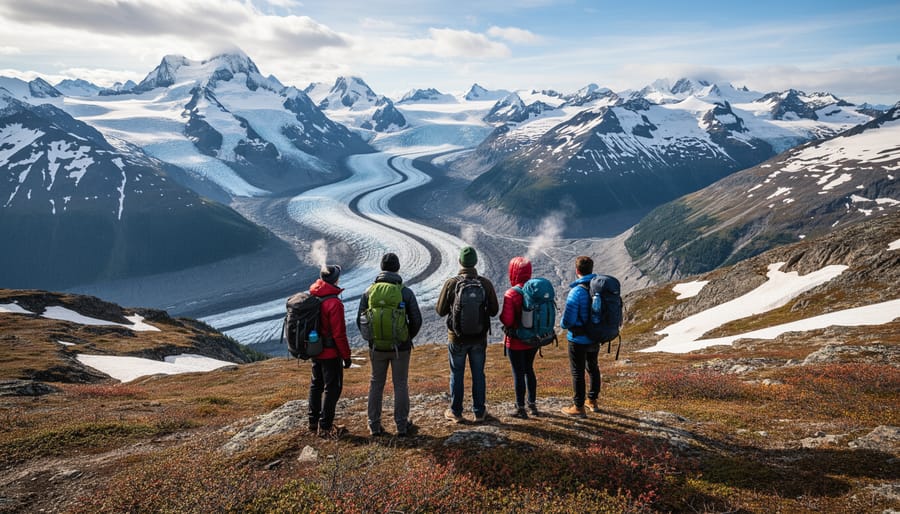
Kluane’s front-country trails let you experience the park’s wild character without committing to multi-day expeditions. The King’s Throne Trail above Kathleen Lake rewards a steep climb with panoramic views across turquoise water to distant peaks, it’s demanding but doable as a half-day outing if you’re reasonably fit. For something gentler, the Kokanee Trail circles Kathleen Lake’s shoreline through spruce forest, offering wildlife spotting chances and mountain reflections with minimal elevation gain.
Rock Glacier Trail near Thechàl Dhâl’ Visitor Centre provides a fascinating geology lesson as you walk across a slow-moving river of rock and ice. It’s short and relatively flat, making it accessible for families. Soldier’s Summit, where the Alaska Highway was officially opened during World War II, combines history with sweeping valley views from a roadside pullout.
These trails prove you don’t need backcountry skills to grasp Kluane’s scale. Even a few hours on well-maintained paths delivers the silence, the crisp air, and those humbling sight lines that define Yukon wilderness.
Backcountry Adventures
The backcountry is where Kluane reveals its true character. Multi-day routes take you beyond the treeline into alpine valleys, across glacial rivers, and into terrain where you might not see another person for days. This isn’t beginner territory. You’ll need solid navigation skills, experience with river crossings, and the ability to be completely self-sufficient. Bear-resistant food containers are mandatory, and you must register before heading out.
The preparation demands are significant: route planning without marked trails, understanding weather patterns that change rapidly at elevation, and carrying everything you need on your back. But the reward is access to wilderness on a scale that’s increasingly rare. You’ll camp beneath peaks that dominate the horizon, cross valleys carved by ancient ice, and experience solitude that redefines what wild means. For serious outdoor enthusiasts, this level of immersion is exactly why Kluane matters. It’s not wilderness you drive through; it’s wilderness you earn.
Flightseeing the Icefields
Standing at ground level in Kluane, you see forests and valleys. You glimpse distant peaks. But you can’t truly comprehend what makes this park extraordinary until you’re airborne above it.
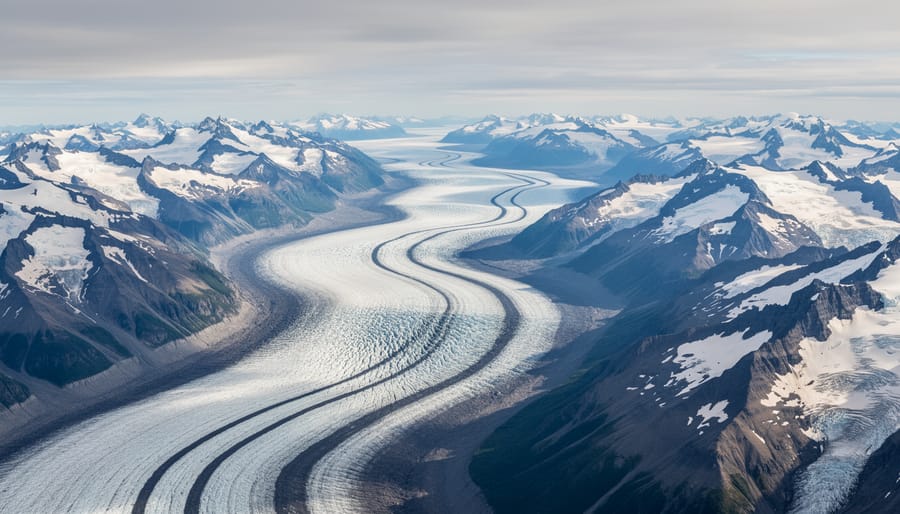
The icefields sprawl so far that ground perspectives simply can’t capture them. From a small plane, you watch glaciers snake between mountains for dozens of kilometres, their surfaces carved into patterns that shift from smooth highways to fractured chaos. The scale becomes visceral when your pilot points out features that look close but are actually hours apart on foot.
Most flightseeing tours launch from Haines Junction, circling over sections of the massive icefield system that covers much of the park. You’ll fly past towering peaks, including some of Canada’s highest mountains, and over glacier-fed valleys where few humans ever walk. The hour-long flights typically reveal more wilderness in sixty minutes than most visitors could access in a week of hiking.
It’s not cheap, but ask anyone who’s done it: seeing Kluane from above isn’t just recommended, it’s the perspective that makes the rest of your visit make sense.
Essential Planning: Permits, Closures, and Current Regulations
Kluane requires a bit of homework before you go, but the regulations make sense once you understand the park’s wilderness scale and conservation priorities. You’ll need to complete mandatory registration for all overnight backcountry trips, this isn’t bureaucracy for its own sake, but a safety measure that lets park staff know where you’re headed and when you’re due back. Bear-resistant food containers are also required for backcountry camping, and you’ll register your itinerary before departing. These requirements follow National Parks camping regulations designed to keep both visitors and wildlife safe.
As of May 2026, several area-specific closures are in effect. Fire bans are active in May 2026 fire ban areas including Ä’äy Chù (Slims) Valley, Bullion Plateau, and Congdon Creek, no open fires, charcoal, or portable stoves in these zones. Thechàl Dhâl’ areas remain closed to protect culturally significant sites, and the kokanee salmon fishery is shut down to preserve vulnerable fish populations (Kokanee closure details explain the conservation rationale). Firearms are prohibited throughout the park, and certain activities face restrictions based on wildlife activity or environmental conditions.
Why all the rules? Kluane’s remoteness means a small mistake can become a big problem, and the park’s ecosystems are fragile at this scale. Grizzlies that learn to associate humans with food become dangerous; wildfires in tinder-dry valleys can spread catastrophically. The regulations protect both you and the landscape you came to experience. Parks Canada updates its safety bulletins regularly, so check the official site within a week of departure rather than relying on information from months earlier.
When to Visit and What to Expect Seasonally
Summer brings the park to life in ways that feel almost unreal if you’re used to southern BC’s seasons. You’ll have daylight stretching well past 10 pm, which means you can hike late into the evening without rushing. Trails are accessible, the tundra blooms with wildflowers, and wildlife is active. This is when most services operate and when flightseeing tours run regularly. The tradeoff? Everyone else has the same idea, so popular trailheads get busy by Yukon standards, and accommodation books up months ahead.
Shoulder seasons, late May through early June and September, offer a different bargain. You’ll find fewer visitors, dramatic light for photography, and often stable weather. But services scale back, some trails may still have snow or become muddy, and you need to be more self-sufficient. Fall brings stunning colors across the tundra, though temperatures drop quickly once the sun sets.
Winter transforms Kluane into something entirely different. The park essentially becomes an expert-only destination with extreme cold, limited daylight, and serious backcountry risks. Some winter travelers come specifically for this, ski mountaineering, northern lights, the profound quiet of frozen wilderness. But it requires specialized skills, equipment, and acceptance that you’re truly on your own. Most casual visitors should plan for the accessible window between late June and early September, when the park reveals itself without demanding survival expertise.
Where to Stay and Base Yourself
Haines Junction, a village of fewer than a thousand people about an hour and a half west of Whitehorse, serves as Kluane’s gateway and only real accommodation hub. You’ll find a handful of small lodges, motels, and B&Bs here, along with basic services like fuel and groceries. It’s not a resort town; expect functional, often family-run places where advance booking matters, especially from June through August when rooms fill quickly.
Inside the park, frontcountry camping at Kathleen Lake Campground puts you right at a trailhead with stunning mountain views, while Congdon Creek offers a quieter, more remote feel. Both require registration and mandatory bear-resistant food containers. Backcountry camping throughout the park demands permits and proper wilderness skills.
The trade-off is simple: Haines Junction gives you a bed, hot shower, and meal options after long days exploring, while camping immerses you in the park’s character from the moment you wake. Many visitors split their stay, camping a few nights and booking a room for the start or end of the trip.
Book lodging months ahead for summer visits. This isn’t a place where you can roll into town and expect options, remote means limited, and limited means planning matters.
Common Questions About Visiting Kluane
Is Kluane really worth the journey from Metro Vancouver?
If you’re drawn to wilderness on a scale that feels truly untouched, yes. Kluane offers something Metro Vancouver’s mountains can’t: icefields that stretch beyond sight, silence that feels absolute, and a sense of remoteness that resets your perspective on what wilderness means.
How much time should I plan for a Kluane trip?
A bare minimum is four days from Vancouver (two for travel, two in the park), but that barely scratches the surface. Five to seven days lets you experience both the accessible trails and a flightseeing tour, while serious backcountry hikers should plan at least ten days to truly immerse themselves.
What’s the wildlife situation, and should I be worried?
Grizzly bears are common here, and you will be in their territory. Mandatory bear-resistant food containers aren’t just bureaucracy; they’re essential safety equipment. Take the park’s wildlife briefings seriously, make noise on trails, and treat every encounter protocol as non-negotiable.
Can I visit without serious backcountry experience?
Absolutely. Day hikes from Haines Junction require no special skills, and a flightseeing tour gives you the park’s most dramatic views without leaving your seat. The front-country trails offer genuine Kluane experiences for families and casual hikers.
What’s the one thing I absolutely shouldn’t miss?
A scenic flight over the icefields. No photograph or trail view conveys the scale of these glaciers; seeing them from above is the moment most visitors say the journey finally made sense to them.
One question that comes up less often but matters just as much: what if conditions force plan changes? Kluane’s remoteness means weather, wildlife activity, or sudden closures can reshape your itinerary on short notice. The travelers who enjoy Kluane most are the ones who build flexibility into their schedule and treat unexpected changes as part of the wilderness experience rather than frustrations to overcome.
If you’re used to Metro Vancouver’s spectacular-but-accessible outdoor scene, where world-class hiking sits thirty minutes from your doorstep and a weekend trip means Whistler or the Gulf Islands, Kluane operates on an entirely different scale. This isn’t a place you casually visit on a long weekend. It demands commitment: days of travel, serious preparation, and acceptance that you’re entering wilderness where your cell signal vanished hundreds of kilometers ago.
That’s precisely what makes it extraordinary. In an era when most “wild” places come with visitor centers, groomed trails, and guaranteed connectivity, Kluane remains genuinely remote. The effort filters out casual tourists and rewards those willing to meet the park on its terms with experiences Metro Vancouver simply can’t offer: icefields stretching beyond the horizon, peaks that dwarf anything in the Coast Mountains, and solitude that redefines what wilderness means.
Here’s my insider perspective after watching friends make this journey: don’t treat Kluane as another checkmark on a national parks list. Go when you’re ready to fully commit, at least a week, ideally longer, and embrace the remoteness rather than fighting it. Pack your patience along with your bear canister. The park’s inaccessibility isn’t a bug; it’s the feature that keeps it wild.