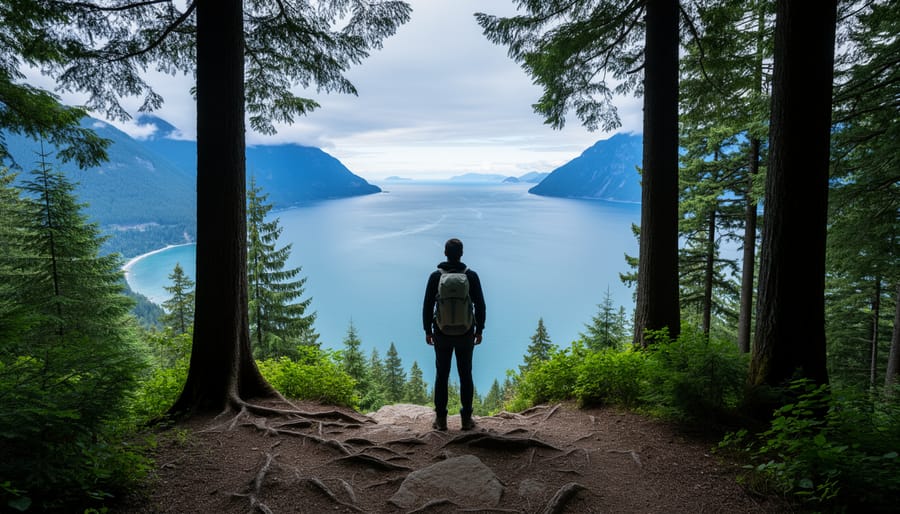
Here’s the truth: there are no national parks within Vancouver city limits, but British Columbia’s most spectacular protected landscapes sit just a couple of hours from downtown. If you’re planning a Vancouver trip and hoping to experience the towering peaks, glacial lakes, and ancient forests that define Canada’s West Coast wilderness, you’re in prime position. The Lower Mainland serves as your gateway to seven accessible national parks, with day-trip options and weekend destinations that transform your city break into a proper mountain adventure.
I learned this the hard way during my first visit, when I assumed Stanley Park counted as a national park. (It doesn’t, though it’s still worth exploring as part of Vancouver outdoor playground activities.) The real national parks require some driving, but the payoff is enormous. Pacific Rim National Park Reserve on Vancouver Island gives you rainforest trails ending at wild beaches. The Gulf Islands offer kayaking through calm waters where orcas surface. And Yoho National Park, though technically in Alberta’s time zone, sits close enough for a long weekend of turquoise lakes that look Photoshopped but aren’t.
The logistics matter more than you’d think. Some parks need advance reservations. Others close access roads in winter. Ferry schedules, park passes, and seasonal wildlife activity all factor into whether a park works for your timeline. This guide breaks down which BC national parks you can realistically visit from Vancouver, how long each takes to reach, and what makes the journey worthwhile.
Why Visit BC National Parks from Vancouver
Vancouver’s proximity to some of Canada’s most spectacular national parks creates an opportunity you won’t find in many major cities worldwide. Within two to three hours of downtown, you can stand on wild Pacific beaches where waves crash against ancient rock formations, or find yourself surrounded by alpine meadows dotted with wildflowers and framed by glacier-capped peaks. These aren’t manicured city parks or even the excellent provincial parks in Metro Vancouver’s backyard, they’re protected landscapes that showcase BC’s most dramatic natural features at their most pristine.
What sets national parks apart is both their scale and their mandate. While provincial parks like Golden Ears or Cypress offer fantastic hiking close to Vancouver, national parks protect entire ecosystems. You’re not just visiting a trail system, you’re entering habitat for grizzlies, mountain goats, Roosevelt elk, and orcas. The infrastructure reflects this: interpretive programs run by Parks Canada naturalists, extensive trail networks designed for multi-day adventures, and backcountry experiences that genuinely feel remote.
The contrast with Vancouver’s urban energy is striking and intentional. After days navigating city streets and tourist crowds, there’s something restorative about hiking through old-growth coastal rainforest where centuries-old cedar trees dwarf you, or scrambling to an alpine lake where the only sounds are marmot whistles and wind through the rocks. These parks force you to slow down, pay attention, and engage with landscapes on their own terms rather than yours.
For visitors spending time in Vancouver, skipping the national parks means missing half the story of what makes this region extraordinary. The city showcases human creativity and culture; the parks reveal the raw natural power that shaped this landscape long before anyone built here.
Top National Parks Within Reach of Vancouver
1. Pacific Rim National Park Reserve
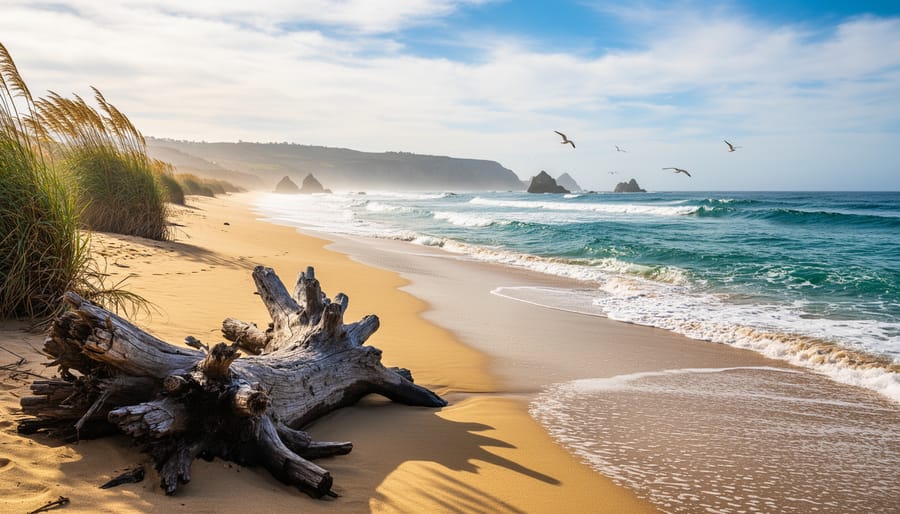
Pacific Rim National Park Reserve sits on Vancouver Island’s rugged west coast, about four and a half hours from Vancouver by car and ferry. It’s the most visited national park destination from the city for good reason: where else can you watch storm-watching surfers carve Pacific swells, kayak through sheltered island archipelagos, and trek one of Canada’s most legendary coastal trails, all within one park?
The reserve divides into three distinct Pacific Rim Park Reserve units each offering completely different experiences. Long Beach is the accessible headline attraction, 16 kilometres of wild, windswept sand between Tofino and Ucluelet. You’ll find families building driftwood forts, experienced surfers paddling out year-round (the water never gets warm, even in summer), and photographers chasing dramatic light through coastal fog. The beach delivers that raw Pacific edge: crashing waves, sea stacks jutting from the surf, and dense Sitka spruce rainforest backing the shore. Short boardwalk trails like the Rainforest Trail and Schooner Cove loop make the temperate forest accessible without serious hiking.
The Broken Group Islands scatter across Barkley Sound, over 100 islets only reachable by boat or kayak. This is paddler territory: protected water, abundant marine life (seals, sea lions, whales if you’re lucky), and established camping sites on several islands. Multi-day kayak trips here rank among BC’s finest coastal adventures, though you need solid paddling skills and tide knowledge.
The West Coast Trail anchors the reserve’s southern end, a grueling 75-kilometre backcountry route famous for testing hikers with ladders, cable cars, mud, and relentless terrain. It’s not a casual walk. Parks Canada limits daily permits (book months ahead) and requires orientation before you start. Most hikers take six to eight days, dealing with whatever weather the Pacific throws at them. It’s bucket-list stuff, but Long Beach remains the draw for typical Vancouver weekend visitors.
2. Gulf Islands National Park Reserve
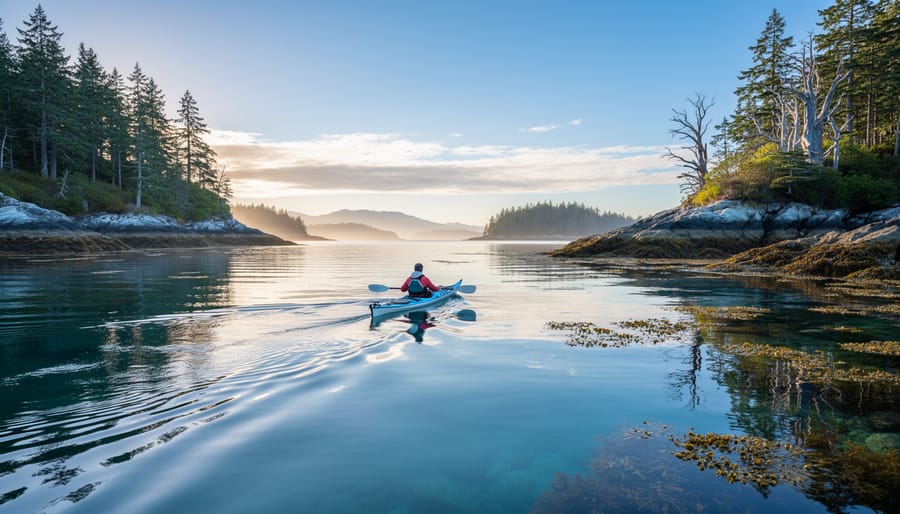
Unlike most national parks with distinct boundaries and entrance gates, Gulf Islands National Park Reserve exists as 15 scattered parcels across multiple islands in the Salish Sea, think of it as a mosaic rather than a single destination. You won’t drive through a park entrance or stay within park borders for days. Instead, you’ll visit specific protected pockets on islands that also contain private property, farms, and small communities. This setup means you’re blending national park experiences with Gulf Islands culture: kayaking through a marine protected area in the morning, hiking a Garry oak meadow trail after lunch, then grabbing dinner at an island café.
The most accessible islands for Vancouver visitors are Mayne, Saturna, and Pender, each reached via BC Ferries from Tsawwassen (roughly 90 minutes to two hours depending on your destination). Mayne Island offers easy cycling and the Japanese Garden Trail through old-growth forest to a rocky shoreline perfect for seal-watching. Saturna Island features the dramatic East Point lighthouse area, part of the park, where you can spot orcas during summer migration periods and explore tide pools. On Pender (split into North and South), the Beaumont Marine Park section provides excellent kayaking access and the Roe Lake trail cuts through rare Garry oak ecosystems, those gnarled, twisted oak trees found almost nowhere else in Canada.
The kayaking here is genuinely world-class, especially around Sidney Spit on Sidney Island and in the sheltered channels between Mayne and Saturna. You’ll paddle alongside harbour seals, river otters, and if you’re lucky in summer months, pods of resident orcas hunting salmon. The water stays calmer than the open Pacific, making this approachable for intermediate paddlers.
What differentiates the park from the broader Gulf Islands? The park protects specific ecological treasures, Garry oak meadows, coastal Douglas-fir forests, important seabird colonies, and critical marine habitat, while the rest of each island contains private land, farms, and residential areas. Check the Mayne, Saturna and Pender access page before heading out, as some park parcels require boat access or involve tricky navigation on island roads.
3. Mount Revelstoke National Park
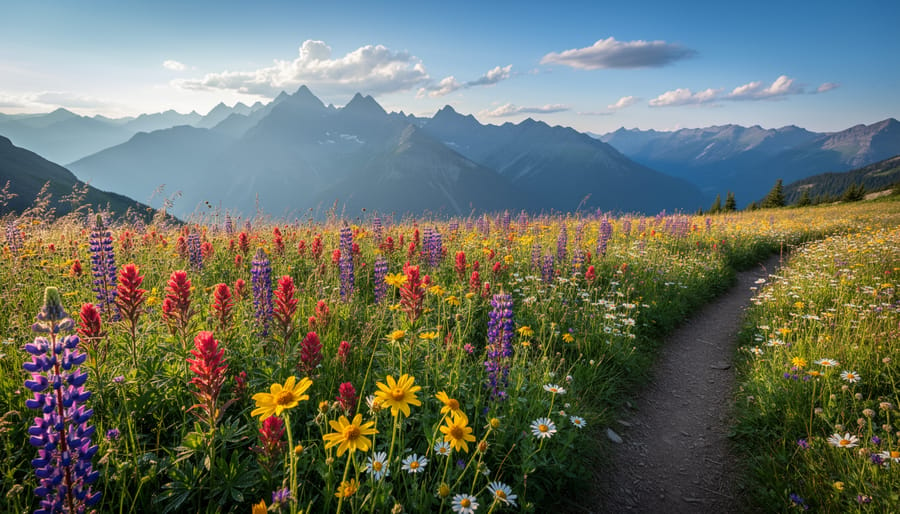
Mount Revelstoke sits about 570 kilometres east of Vancouver in the Columbia Mountains, making it a longer drive than coastal options but worth every highway kilometre. The park’s crown jewel is the Meadows in the Sky Parkway, a 26-kilometre paved road that climbs from the valley floor at Revelstoke town to subalpine meadows at 1,938 metres elevation. It’s one of only two roads in Canada that reaches true alpine terrain, and the views during the ascent are spectacular, think dense old-growth forests giving way to increasingly sparse vegetation as you climb.
The alpine wildflower meadows peak from mid-July through early August, transforming the summit plateau into carpets of pink heather, yellow glacier lilies, and countless other species. I’ve visited in late July and found myself surrounded by blooms so thick you couldn’t see the ground. The timing window is narrow though, arrive before early July and you’ll encounter snow patches; come after mid-August and you’ve missed the show.
From the parkway’s end, the short Balsam Lake Trail (one kilometre round trip) delivers massive payoff for minimal effort, offering panoramic views of the Selkirk and Monashee ranges. The Summit Trail adds another kilometre if you want the actual peak experience. These are genuinely short hikes, 30 minutes or less, yet you’re standing in alpine environment that would require hours of climbing elsewhere.
What sets Mount Revelstoke apart is accessibility married to genuine alpine beauty. You drive through multiple ecosystem zones in 45 minutes, park, and walk into scenery that typically demands serious backcountry commitment. For Vancouver visitors combining parks, it pairs perfectly with Glacier National Park just 72 kilometres east.
4. Glacier National Park
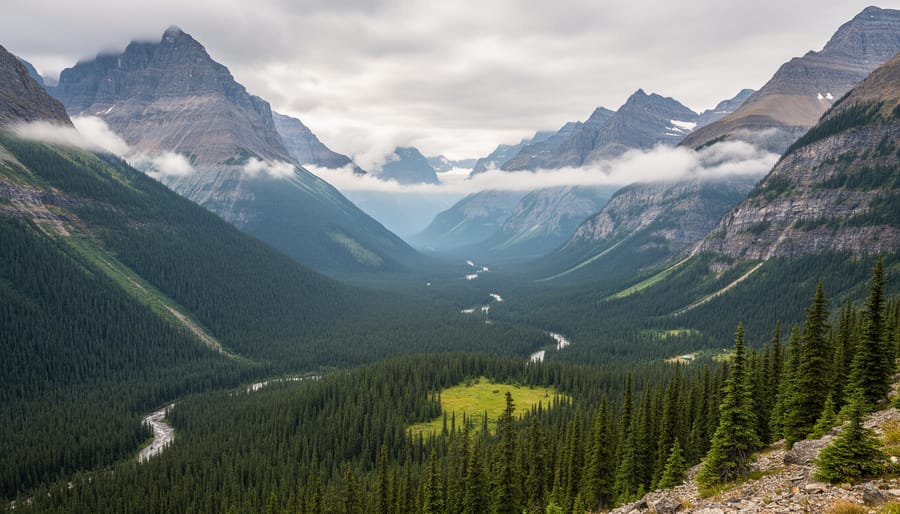
Glacier National Park straddles the Trans-Canada Highway at Rogers Pass, where the road punches through the rugged Selkirk Mountains in a landscape shaped by ice, avalanches, and railway history. Unlike its American namesake, this 1,350-square-kilometre park feels raw and serious, towering peaks, massive glaciers calving above steep valleys, and old-growth cedar-hemlock forests that survived fires and slides for centuries.
The Rogers Pass Discovery Centre makes an excellent first stop. Beyond the interpretive displays, you’ll learn why this area has the most sophisticated avalanche control program in North America. Highway crews use howitzers and remote-trigger systems to bring down unstable snowpack before it threatens the road, a necessity in a pass that sees up to 17 meters of snow annually. The centre overlooks the Illecillewaet Valley, where you can often watch avalanches cascade down opposing slopes in winter and spring.
For accessible viewpoints, pull into the Meeting of the Waters trail (1 km loop through massive cedars) or drive to Hemlock Grove Boardwalk, where a wheelchair-accessible path winds through ancient forest. The short Loop Brook Trail leads to a suspension bridge over a glacial stream, minimal effort for dramatic scenery.
Serious hikers tackle the Hermit Trail to alpine meadows or push toward the Abbott Ridge viewpoint, but these demand route-finding skills and comfort with exposure. Most trails here involve significant elevation gain and require proper preparation.
Pairing Glacier with Mount Revelstoke works perfectly, they’re separated by roughly an hour’s drive through Golden. Plan a full day for both parks, or better yet, overnight in Golden to explore each properly without rushing back to Vancouver. Budget at least two to three hours for Glacier’s highlights, more if you’re hiking beyond the roadside trails.
5. Yoho National Park
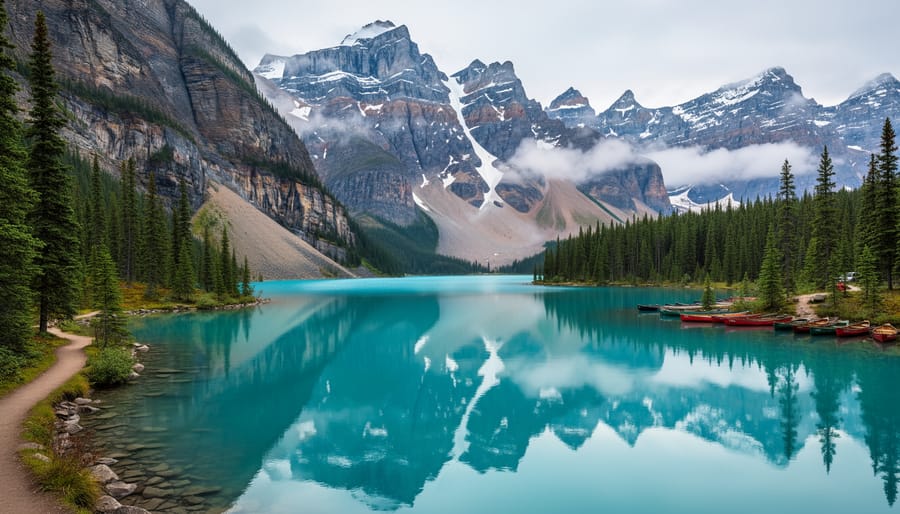
Yoho sits tucked between Banff and Kootenay in the Rocky Mountain cluster, but it punches well above its weight despite being the smallest of BC’s mountain national parks. What sets it apart is the concentration of jaw-dropping features in a compact area, you can hit multiple highlights in a single day without the sprawling distances that define Banff or Jasper.
Takakkaw Falls is the showstopper: a 373-meter ribbon of glacial meltwater that ranks among Canada’s highest waterfalls. The short walk from the parking area delivers you to the base where the thundering spray creates rainbows on sunny afternoons. The access road winds up a series of switchbacks that’ll test your driving nerves but reward you with alpine views. Note that this road typically opens in late June after avalanche hazard passes.
Emerald Lake earns its name honestly. The glacial silt suspended in the water creates that impossible turquoise color that photographs can’t quite capture. Rent a canoe from the historic lodge and paddle out for mountain reflections, or walk the easy 5.2-kilometer loop around the shoreline. It’s popular but absorbs crowds better than Lake Louise across the border in Alberta.
The Burgess Shale fossil beds contain some of the world’s most significant Cambrian fossils, 500-million-year-old marine creatures preserved in remarkable detail. Access requires booking a guided hike months ahead through the Burgess Shale Geoscience Foundation, but fossil enthusiasts consider it bucket-list worthy.
Natural Bridge shows where the Kicking Horse River has carved through solid rock, creating a natural stone arch. It’s a quick roadside stop that kids love, especially when the river runs high in early summer.
For serious hikers, the Iceline Trail delivers alpine meadows, glacier views, and fewer people than Banff’s famous routes.
Planning Your Visit: Practical Information
Getting There from Vancouver
Getting to BC’s national parks from Vancouver requires different approaches depending on which park you’re visiting. Here’s what you need to know about transportation options and routes.
| Park | Distance | Drive Time | Route | Ferry Required? |
|---|---|---|---|---|
| Pacific Rim | 315 km | 5-6 hours | Highway 1 to Nanaimo ferry, then Highway 4 | Yes (Horseshoe Bay, Departure Bay) |
| Gulf Islands | Varies | 2-4 hours | Highway 99 to Tsawwassen ferry terminal | Yes (Tsawwassen, Gulf Islands) |
| Mount Revelstoke | 630 km | 6.5-7 hours | Highway 1 through Fraser Canyon | No |
| Glacier | 680 km | 7-7.5 hours | Highway 1 via Rogers Pass | No |
| Yoho | 800 km | 8-9 hours | Highway 1 through Glacier and Kicking Horse Pass | No |
For Pacific Rim and Gulf Islands, you’ll need BC Ferries reservations, especially during summer weekends. Book your crossing at least a week ahead in July and August. The Horseshoe Bay ferry to Nanaimo runs frequently but fills up fast. From Nanaimo, Highway 4 over the island’s spine is winding and slow, don’t rush it.
The mountain parks are straightforward drives, but timing matters. Rogers Pass can close temporarily for avalanche control between November and April, though the highway typically reopens within hours. Check DriveBC before leaving. Winter tires are mandatory on mountain highways from October through March, and chains should be in your trunk.
Rental cars make sense if you’re planning multi-day trips with camping or hotel stays. For Pacific Rim, a car gives you freedom to explore Tofino and Ucluefield beyond the park. For quick visits to Gulf Islands, tours from Vancouver handle ferry logistics and let you skip driving, but you’ll sacrifice flexibility.
The drive itself rewards you, particularly the Sea-to-Sky and Fraser Canyon routes. Budget extra time for photo stops at Stawamus Chief or Hell’s Gate.
Passes, Permits, and Fees
Here’s what you need to know about costs and permits before you head out. Most BC national parks require a Parks Canada admission passes and understanding your options will save you both money and hassle at the gate.
- Discovery Pass (annual): $75.25 for adults, covers unlimited entry to all Parks Canada sites for a year from purchase date
- Daily entry: $10.50 per adult, valid until 4pm the following day at the park where purchased
- Family/group pass (annual): $150.50, covers up to seven people in one vehicle regardless of relationship
- Youth (17 and under): Always free
- Seniors (65+): Discounted passes available
If you’re planning to visit two or more parks during your trip or make multiple visits throughout the year, the Discovery Pass pays for itself quickly. I always keep one in my glove box, it’s valid at over 80 Parks Canada locations nationwide, not just BC sites.
Camping requires separate fees on top of entry passes. You’ll pay $15-40 per night depending on the campground and services. For popular spots like Pacific Rim or Yoho, book through the Parks Canada reservation system as early as possible, especially for July and August weekends. Backcountry camping permits cost extra and have quotas, these fill up fast for trails like the West Coast Trail.
Parks Canada offers free admission on select days throughout the year, typically including Canada Day and Parks Day in July. Check their website before your visit, as dates can shift year to year.
Best Times to Visit
Timing your BC national park visit makes all the difference. Pacific Rim peaks July through September when Long Beach sees reliably dry weather, but June and October offer empty beaches and dramatic storm-watching without summer’s Tofino crowds. I’ve watched surfers have entire breaks to themselves in late September. Gulf Islands shine May through September, with June giving you wildflowers minus August’s ferry lineups and campground competition.
The mountain parks, Revelstoke, Glacier, and Yoho, follow alpine rhythms. Meadows in the Sky Parkway typically opens mid-June and closes October, with wildflower peak hitting mid-July through early August. Rogers Pass stays accessible winter for hardcore backcountry skiers, but casual visitors should stick to June through September when trails are snow-free. Yoho’s Takakkaw Falls thunders hardest during June snowmelt.
Wildlife watching favors shoulder seasons: black bears forage spring and fall, while salmon runs (September-October) draw both bears and eagles to coastal areas. Winter essentially closes mountain park facilities, though unlike Vancouver’s year-round outdoor access, these alpine environments demand serious gear and experience.
Book summer camping six months ahead. Spring and fall let you show up with more flexibility. If you’re visiting during Canada Day transit holidays, expect peak crowds everywhere, plan accordingly or shift your dates by two weeks in either direction.
Where to Stay
The accommodation landscape varies dramatically depending on which park you’re targeting. Pacific Rim works well as a multi-day trip based in Tofino or Ucluelet, both offer everything from budget motels to high-end resorts, plus the park’s own campgrounds at Green Point (book months ahead for summer). Same-day returns to Vancouver aren’t realistic given the 5-6 hour drive plus ferry time.
Gulf Islands visitors typically stay overnight on the islands themselves. Small inns, B&Bs, and basic campgrounds dot Saturna, Mayne, and Pender islands. Ferry schedules make day trips possible but rushed, you’ll appreciate the slower pace of an overnight stay.
For Mount Revelstoke and Glacier, the town of Revelstoke provides the most services with chain hotels and local motels. These parks work as stops on a longer road trip rather than standalone destinations. Golden serves Yoho visitors similarly, though the hamlet of Field sits right in the park with a handful of accommodation options including the historic Emerald Lake Lodge.
Parks Canada campgrounds require reservations through their national system, typically opening in January for the upcoming summer. Backcountry camping needs permits and proper experience, the West Coast Trail particularly demands thorough preparation. I’ve learned that weekday bookings and shoulder seasons (late May, September) offer better availability and smaller crowds without sacrificing the experience.
Local Tips and Insider Knowledge
The biggest mistake Vancouver visitors make is treating BC’s national parks like provincial parks or regional trails, these are remote wilderness areas where cell service disappears quickly and weather changes without warning. I learned this the hard way at Pacific Rim when fog rolled in at Florencia Bay and my phone’s GPS became useless.
For coastal parks like Pacific Rim and Gulf Islands, pack layers even in summer. The temperature difference between Vancouver and Long Beach can be 10 degrees, and ocean wind cuts through cotton. I keep a waterproof shell and warm fleece in my car year-round for spontaneous island trips. Mountain parks demand different prep: sunscreen at higher elevations is non-negotiable (I’ve watched countless tourists turn lobster-red at Meadows in the Sky), and afternoon thunderstorms are common in summer at Yoho and Glacier.
Timing matters more than most realize. Hit Pacific Rim’s trails before 9 AM to avoid tour bus crowds, or visit on weekdays in September when the weather’s still decent but summer chaos has ended. For mountain parks, start alpine hikes early, not just for crowds, but because afternoon clouds obscure the views you drove hours to see.
Wildlife safety goes beyond bears. At Gulf Islands, aggressive otters near docks are surprisingly common (give them space). In mountain parks, never approach elk during fall rutting season, and store all scented items in your car trunk, not the back seat where bears can see them through windows. The local stories you’ll hear about wildlife encounters aren’t exaggerations, respect the distance rules Parks Canada posts.
One insider move: check Parks Canada’s Twitter feed the morning you leave Vancouver. Trail closures, wildlife warnings, and road conditions appear there before the website updates. And unlike Vancouver heritage sites where facilities are predictable, national park washrooms and water sources can be closed unexpectedly for maintenance. Carry extra water and snacks, gas stations thin out fast once you leave the Lower Mainland.
Frequently Asked Questions
Heading out to BC’s national parks from Vancouver raises plenty of practical questions, especially if you’re new to Parks Canada properties or unsure about logistics. Here are answers to the most common concerns I hear from Vancouver travelers planning their first national park visits.
Which national park is closest to Vancouver?
Gulf Islands National Park Reserve is technically closest, with some island parcels accessible via a 90-minute BC Ferries sailing from Tsawwassen. However, Pacific Rim National Park Reserve on Vancouver Island is the most popular and accessible major park, about 4-5 hours from Vancouver including the ferry crossing.
Can I visit multiple parks in one trip?
Yes, but choose wisely. Mount Revelstoke and Glacier parks work perfectly together as they’re only 30 minutes apart along the Trans-Canada Highway. You can also combine Yoho with a Banff or Jasper visit, though that makes for a longer trip from Vancouver.
Are BC national parks suitable for families and beginners?
Absolutely. All the parks near Vancouver offer easy, family-friendly trails alongside more challenging options. Pacific Rim’s beaches and boardwalks, Mount Revelstoke’s summit drive, and Emerald Lake in Yoho are perfect for kids and first-time park visitors.
What’s the difference between national and provincial parks in BC?
National parks are federally managed by Parks Canada with standardized entry fees and facilities, while provincial parks are managed by BC Parks and often free to enter (though campground fees apply). National parks typically offer more visitor services and stricter conservation standards.
Are guided tours available from Vancouver?
Yes, numerous operators run day trips to Pacific Rim and multi-day tours to the Rocky Mountain parks. These handle all logistics but cost more than independent travel. For Gulf Islands, consider guided kayak tours that launch from the islands themselves rather than Vancouver.
Do I need to book camping or permits in advance?
For summer visits, absolutely. Popular campgrounds at Pacific Rim, Yoho, and other parks fill up months ahead through the Parks Canada reservation system. Backcountry permits and some day-use areas also require advance booking during peak season.
One question that doesn’t come up enough: should you rent a car or join a tour? I’ve done both, and while tours eliminate driving stress on mountain highways, having your own vehicle gives you freedom to explore at your own pace and visit multiple trail heads. For Gulf Islands, your own car on the ferry makes island hopping far easier than relying on limited island transit.
BC’s national parks showcase the province’s most spectacular landscapes, and they’re all surprisingly accessible from Vancouver. Whether you’re chasing Pacific waves at Long Beach, paddling quiet coves in the Gulf Islands, or standing among wildflower meadows at Mount Revelstoke, these protected spaces offer experiences that complement the city’s urban attractions perfectly.
The beauty of these parks lies in their diversity. You can watch storm waves crash against ancient coastal forests one weekend, then hike through alpine country the next. Each park has its own character, its own rhythm, and rewards different kinds of exploration.
Don’t let distance intimidate you. Even the furthest parks make worthwhile weekend trips, and closer options like the Gulf Islands work brilliantly as day adventures. I’ve watched too many visitors stick to Vancouver’s city limits when some of Western Canada’s most stunning scenery sits just hours away.
Before you go, visit the Parks Canada website to check current trail conditions, make camping reservations, and confirm seasonal road access. Many popular sites book months ahead during summer, so planning early pays off.