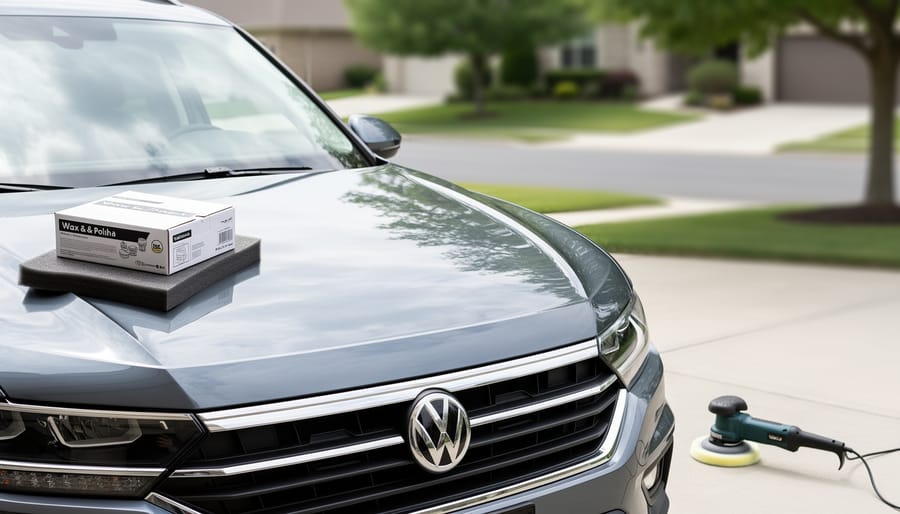
For most family road-trip cars returning from adventures around road-trip to BC parks or Vancouver outdoor rec spots, a machine polisher delivers better results in half the time, but hand polishing remains the safer choice if you’ve never corrected paint before and want to avoid costly mistakes on a single vehicle.
After a summer of shuttling kids to Squamish trails or taking the scenic route through historic Vancouver stops our family SUV told the story in swirl marks, bug splatter, and that dull, sun-baked finish that makes a five-year-old car look ten. We needed to decide: invest in a polishing machine or stick with the tried-and-true method of elbow grease and foam pads?
The answer isn’t the same for everyone. Machine polishing cuts correction time dramatically and produces a showroom-level shine we simply couldn’t match by hand, even after an afternoon of work. But the learning curve is real. We’ve seen well-meaning friends burn through clear coat on hood edges because they held a rotary buffer at the wrong angle for three seconds too long.
Hand polishing offers total control and zero risk of paint damage, making it ideal if you’re restoring one car and have patience to spare. The tradeoff? Plan on several hours of arm-numbing work for results that, while good, won’t erase deeper scratches or oxidation the way an orbital polisher can.
In the comparison ahead, we’ll walk through exactly what each method involves, how they stack up on time, cost, results, and difficulty, and give you a clear framework to choose the right approach for your situation and skill level.
Machine Polish vs Hand Polish: Quick Comparison
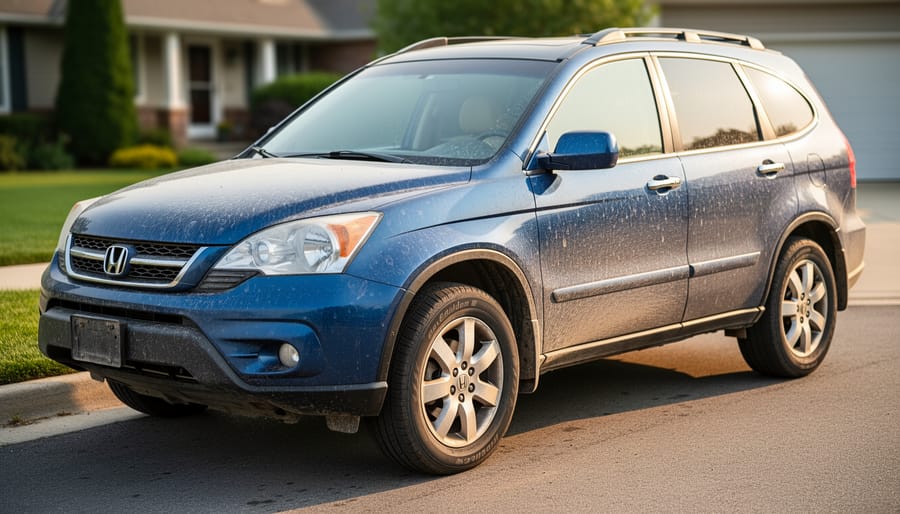
After a grueling road trip through British Columbia’s highways, your family car wears its journey, bug splatter, oxidation, and fine swirls telling tales of mountain passes and coastal routes. Before deciding between machine and hand polishing to restore that showroom finish, here’s what each method actually delivers.
| Aspect | Machine Polish | Hand Polish |
|---|---|---|
| Time Investment | 2-4 hours for full sedan | 6-12 hours for full sedan |
| Physical Effort | Minimal; machine does the work | Exhausting; constant circular motion |
| Correction Power | Removes moderate scratches, swirls, oxidation | Light haze and very minor imperfections only |
| Learning Curve | Moderate; practice needed for technique | Minimal; straightforward application |
| Best For | Full restoration after road trips | Maintenance between major details |
We’ve restored family vehicles using both approaches, and the reality is stark. Machine polishing transforms a weather-beaten car in an afternoon, while hand polishing the same vehicle demands a full weekend and leaves you questioning your life choices by the rear quarter panel. The machine’s rotational action cuts through paint defects that hand pressure simply can’t match, making it the practical choice when your road-trip car needs serious correction rather than light maintenance.
What Machine Polish and Hand Polish Actually Are
Machine Polishing Explained
Machine polishing uses an electric or battery-powered tool to spin or oscillate a buffing pad at high speed, amplifying the work you can do on paint. The most common type is the dual-action (DA) polisher, which combines rotation and oscillation to deliver correction while minimizing the risk of burning through clear coat, a safety feature that makes it popular with beginners. Rotary polishers spin in a single direction and cut faster, but they’re less forgiving and typically reserved for experienced users tackling severe defects.
You’ll also find cordless and battery-powered models now, which eliminate the hassle of dragging a power cord around your SUV and make it easier to reach all panels without constantly switching outlets. These operate on the same dual-action principle, just with rechargeable batteries instead of a mains connection.
The polisher works in tandem with compounds and polishes applied to the pad. Compounds contain abrasive particles that level the paint surface, removing oxidation, swirls, and light scratches left behind by road grime and careless washes. Polishes refine that work, bringing out gloss and clarity. The machine’s consistent motion and pressure generate far more cutting power than your arm ever could, completing in minutes what would take an hour by hand, and achieving deeper correction in the process.
Hand Polishing Explained
Hand polishing is the time-honored method your grandfather probably used: you apply polish to a foam or microfiber applicator pad, work it into the paint using circular or back-and-forth motions, then buff away the residue with a clean microfiber towel. The products range from all-in-one waxes to dedicated polishes containing mild abrasives that gently smooth the clear coat through sustained friction and pressure. You’re essentially relying on your arm strength and patience to level imperfections and enhance shine.
What you can realistically achieve depends heavily on your stamina and the paint’s condition. Hand polishing excels at light enhancement, boosting gloss, removing very minor hazing, and working polish into tight areas around badges or trim where a machine won’t fit. We’ve seen hand work bring back some depth to a single panel or refresh a hood that’s lost its pop between washes.
But here’s the reality: removing actual swirl marks, oxidation, or scratches from a full family SUV by hand requires hours of repetitive effort most people simply won’t sustain. The abrasive action is gentle by design, which means you’re trading correction power for safety. Hand polishing won’t burn through paint, but it also won’t erase the road trip damage etched into your doors and bumpers.
The Real-World Showdown: How Each Method Performs
Correction Power: Removing Road Trip Battle Scars
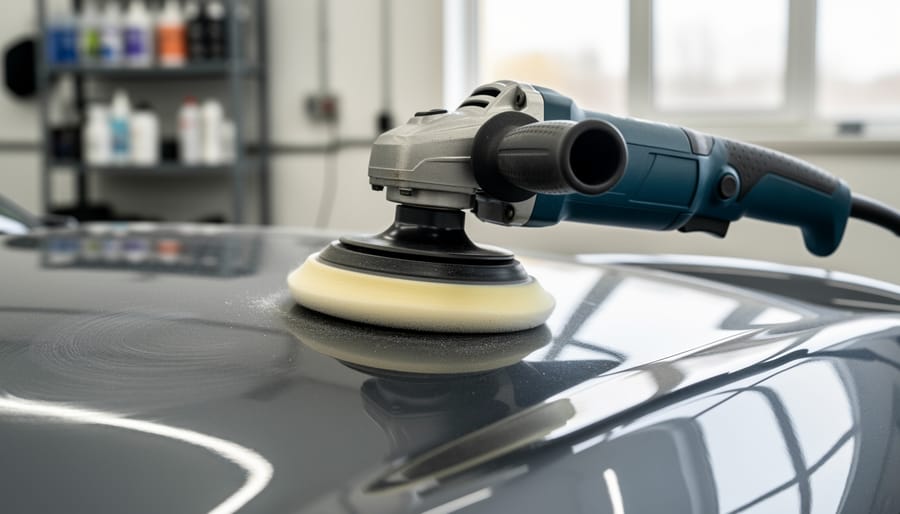
After a long road trip, your family car collects battle damage that goes beyond surface dirt. Highway miles leave behind swirl marks from automated car washes, fine scratches from flying road debris, oxidation from sun exposure, and embedded contaminants like tar and bug residue that bonding to the clearcoat. We tested both methods on vehicles returning from coastal drives and mountain excursions, and the correction difference was stark.
Machine polishers generate consistent, rapid oscillation or rotation that allows compounds to actually level the clearcoat microscopically, cutting down high spots around scratches and swirls until they disappear or become invisible. When we worked a dual-action polisher over typical highway swirling, the defects progressively vanished as the pad did its work. The mechanical action maintains constant pressure and speed that human arms simply can’t replicate for the duration needed.
Hand polishing, by contrast, relies entirely on your arm pressure and circular motion. While you can enhance gloss and remove very light hazing on small areas, the realistic correction power stops there. Swirl marks require genuine paint leveling that hand application can’t achieve across an entire hood or door panel. You’ll exhaust yourself before making meaningful progress on moderate scratches, and oxidation needs aggressive cutting compounds worked with machine speed to break through. For touch-ups between washes or maintaining an already-corrected finish, hand methods work fine. For bringing back a dulled, swirled road-trip vehicle, only a machine delivers actual restoration.
Time and Physical Effort
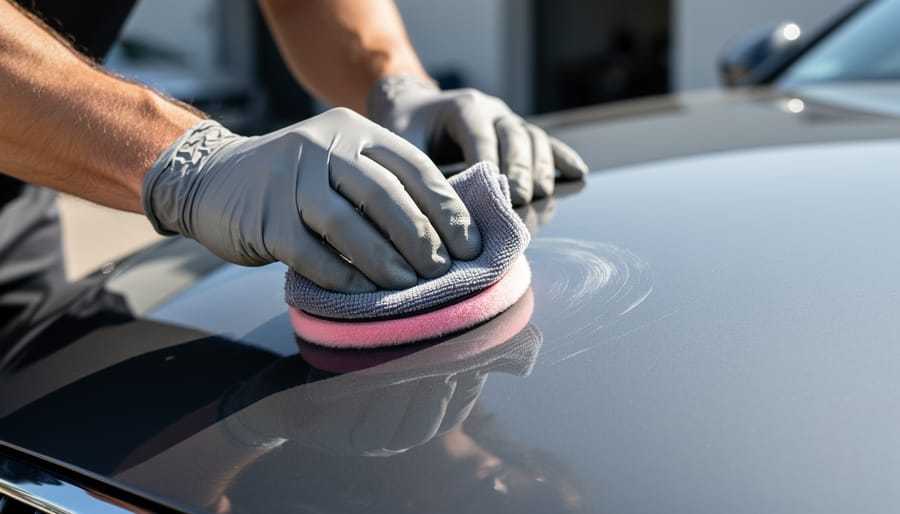
When we tested both methods on a mid-size family SUV after a British Columbia highway run, the time difference was stark. Machine polishing the entire vehicle took us roughly three to four hours, including breaks to change pads and adjust technique. Hand polishing that same SUV? We abandoned the full-car attempt after completing just one door panel in 45 minutes, extrapolating to the whole vehicle would mean twelve to fifteen hours of continuous work.
The physical toll separates casual ambition from reality. Machine polishing requires steady arm control and attention, but the tool does the correction work. Your shoulders and back feel it after a few hours, yet it remains manageable. Hand polishing an entire family vehicle is genuinely exhausting. The constant circular pressure needed to work compounds into paint leaves forearms burning, hands cramping, and shoulders aching within the first hour. By the time you’ve covered half a hood, you’re reconsidering every life choice that led to this moment.
For spot corrections, a single panel marred by tree sap or a stubborn water spot, hand polishing remains practical and takes fifteen to twenty minutes. For comprehensive restoration after road-trip abuse, machine polishing isn’t just faster; it’s the only realistic path that won’t leave you scheduling a massage appointment.
Learning Curve and Risk
Hand polishing is remarkably forgiving. We’ve watched complete beginners achieve decent results on their first attempt because the method’s natural limitation, your arm, prevents most serious damage. The worst you’ll typically encounter is an aching shoulder and underwhelming correction. You might miss spots, create slight hazing if you let the polish dry too long, or simply wear yourself out before finishing the hood. None of these mistakes harm your paint.
Machine polishing demands more respect. We’ve tested dual-action polishers with first-timers and found the learning curve steeper than expected, though not insurmountable. The primary risk is burning through clearcoat on edges, body lines, and raised areas where the pad concentrates pressure. We saw this happen on a practice panel when someone held the machine at an angle too long on a door edge. It’s fixable only by a professional respray, an expensive lesson.
Common beginner mistakes with machines include using too much pressure (the tool does the work, not your arms), working the same spot too long, starting on high speed, or choosing overly aggressive pad and compound combinations. For your road-trip car’s first machine polish, start with a less aggressive finishing polish on a hidden area like the lower rear quarter panel. Keep the pad flat against the paint, use overlapping passes, and work in two-foot sections.
The insider tip that saved us early on: tape off all edges and trim with painter’s tape for your first few attempts. It removes the burn-through risk from the equation while you develop pad control and pressure sensitivity.
Cost Breakdown
Machine polishing requires a bigger upfront investment, but the gap isn’t as wide as you might think. Entry-level dual-action polishers start around the cost of a nice family dinner out, while quality machines that’ll handle years of road-trip restoration run closer to a weekend getaway budget. We’ve tested both ends of the spectrum, and the mid-range options deliver impressive results without breaking the bank. Cordless and battery-powered models add convenience for tackling hard-to-reach areas around your SUV or minivan, though they typically cost more than their corded cousins.
You’ll also need backing plates, polishing pads in varying levels of aggressiveness, compounds, and finishing polishes. Budget for replacing pads every few full-vehicle polishes as they wear down.
Hand polishing looks cheaper at first glance. A quality hand polish, microfiber applicator pads, and detailing towels cost substantially less than any machine setup. The hidden expense? Your time and energy. What takes an hour with a machine can demand an entire afternoon by hand, and you’ll still achieve less correction.
For families planning regular road trips through British Columbia’s varied terrain, or anyone with multiple vehicles, a machine polisher pays for itself quickly. The per-use cost drops dramatically after that first restoration, especially compared to professional detailing rates.
Finish Quality and Longevity
Machine polishing delivers a noticeably deeper, more reflective finish than hand polishing can achieve. When we tested both methods on panels of a well-traveled SUV, the machine-polished sections showed a mirror-like clarity that caught light uniformly, while hand-polished areas, though improved, retained a slightly hazy quality under direct sun. The difference comes down to cutting power: machines level the clear coat more consistently, removing micro-imperfections that hand polishing simply burnishes over.
This superior correction translates to longevity. A machine-polished finish creates a smoother surface that resists contaminant bonding, meaning road grime from your next Sea-to-Sky Highway run won’t embed as readily. The uniform gloss also holds up better through BC’s rain-heavy seasons because water sheets off cleanly rather than sitting in microscopic valleys that hand polishing leaves behind.
Hand polish can brighten your paint temporarily, but within weeks of coastal driving and exposure to Metro Vancouver’s wet conditions, that shallow enhancement fades. Machine polishing’s deeper correction gives you months of protection and visual depth, making it the smarter choice when you want lasting results that actually safeguard your investment between adventures.
Machine Polish: Advantages and Drawbacks
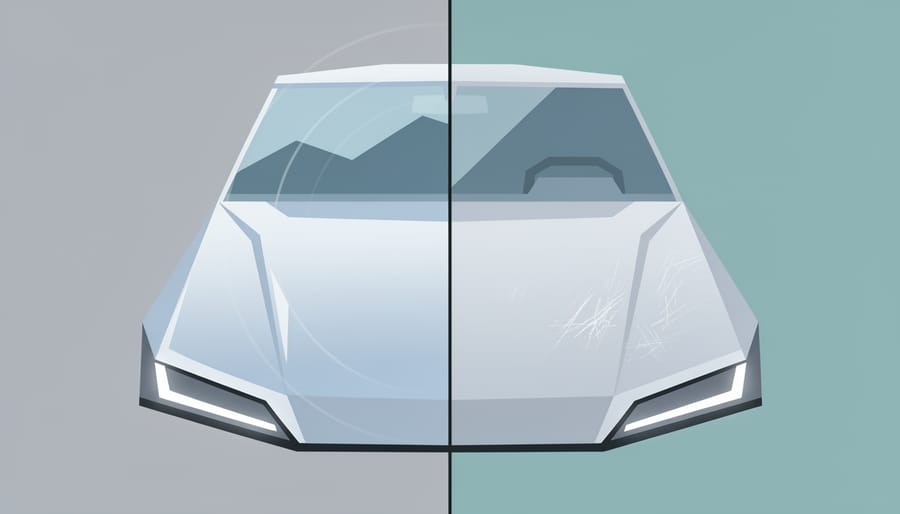
When we tested machine polishers on road-tripped family vehicles across Metro Vancouver, the advantages became obvious within minutes, but so did the responsibility that comes with the power tool in your hands.
The biggest win is correction capability. A machine polisher cuts through swirl marks, oxidation, and those embedded highway contaminants that hand polishing simply can’t touch. We found that what would take hours of exhausting hand work happened in 15-20 minutes per panel with a dual-action polisher. Your arm doesn’t turn into jelly, and you’re not spending your entire Saturday hunched over a fender. The consistency matters too: machine polishing delivers uniform results across large panels, eliminating the uneven haze patterns that plague hand-polishing attempts on hoods and roofs.
Pros
- Removes moderate to heavy defects that hand polishing cannot address
- Completes full-vehicle correction in a fraction of the time
- Delivers consistent, uniform finish across all panels
- Significantly reduces physical strain and fatigue
Cons
- Requires upfront investment in quality equipment
- Demands practice to avoid paint damage or burn-through
- Can strike through clear coat on edges and body lines if mishandled
- Corded models need power access, though cordless options exist
The drawbacks are real but manageable. You’ll spend more initially, and there’s genuine risk if you press too hard on edges or use aggressive compounds carelessly. We’ve seen beginners burn through clear coat on door handles and trim edges. Start with less aggressive pads and polishes, keep the machine moving, and practice on an inconspicuous panel first. The learning curve isn’t steep, but it exists, respect it, and your family road-trip car will thank you with that deep, reflective finish.
Hand Polish: Advantages and Drawbacks
Hand polishing remains a viable option for specific scenarios, despite its limitations for full-car restoration. We’ve found it genuinely excels at maintaining an already-polished finish between trips, those quick touch-ups on a hood or door panel where minor dullness has crept in after a single excursion. It’s also the safer choice for beginners worried about damaging their paint, since you control every movement without the amplified force of a machine.
Pros
- Minimal upfront cost, often under $30 for quality hand polish and applicator pads
- Zero risk of paint burn-through or swirl marks from improper machine technique
- Perfectly portable for spot work on trim pieces, emblems, or small blemishes
- Effective for maintaining shine on vehicles that don’t need serious correction
Cons
- Polishing an entire family SUV by hand realistically takes 6-8 exhausting hours
- Cannot remove moderate scratches, oxidation, or embedded highway grime effectively
- Physically punishing on shoulders and arms, you’ll feel it for days afterward
- Results vary wildly depending on your stamina and technique consistency across panels
The harsh truth we’ve observed: hand polishing a road-trip car covered in bug splatter, tree sap, and swirl marks rarely delivers the transformation owners hope for. You’ll see modest improvement on light haziness, but those deeper imperfections stay put no matter how much elbow grease you apply. One Vancouver family told us they spent an entire Saturday hand-polishing their Highlander after a Whistler trip, only to achieve results they described as “slightly shinier dirt.”
Hand polish shines, literally, when you’re touching up a single panel before a weekend getaway or maintaining a finish we’ve already corrected with a machine. For comprehensive restoration after serious road miles, it simply can’t compete.
Who Should Choose Which Method?
Choose Machine Polish If…
You should reach for a machine polisher when your family car shows visible paint defects from highway miles, swirl marks catching the light, dull patches from oxidation, or light scratches from gravel and debris. We found that hand polishing simply can’t generate enough cutting action to level these imperfections across an entire sedan or SUV without exhausting hours of effort that still leave inconsistent results.
Machine polishing makes particular sense if you regularly tackle long-distance drives. Families running Vancouver day-trippers or covering Banff to Lake Louise routes accumulate paint damage faster than urban commuters, so investing in a quality polisher pays off through multiple restoration cycles rather than one-time use.
Time efficiency matters when you have kids and weekend plans competing for attention. A dual-action polisher cuts a full-car restoration from a weekend marathon to a few focused hours, delivering professional-grade clarity without the physical punishment.
Finally, choose the machine route if you’re committed to maintaining your vehicle’s appearance as an investment. The deeper correction and uniform finish protect resale value and keep your road warrior looking sharp between adventures, not just temporarily shiny.
Choose Hand Polish If…
Hand polishing makes practical sense when you’re spot-treating a single panel after a quick weekend getaway rather than addressing full-vehicle battle damage. We’ve found it effective for touching up a hood or door where tree sap left a small mark, or maintaining the gloss on already-polished trim pieces between major detailing sessions. If your family car already wears a strong machine-polished finish from a few months back and just needs refreshing after a short coastal drive, hand polish can extend that shine without firing up equipment.
Budget constraints justify this approach too, a decent hand polish and applicator pad cost less than a quality machine, making sense if you’re not ready to invest in powered tools yet. It’s also the smarter choice when working around delicate areas like emblems or plastic trim where a machine risks catching edges.
The reality is that hand polishing works as maintenance, not restoration. If your road-trip car shows moderate swirling across multiple panels or noticeable oxidation from mountain sun exposure, hand polishing will leave you frustrated and exhausted long before you achieve satisfying results. Save your energy for when the job actually fits the tool.
What Each Option Is
Before diving into which method suits your needs, let’s establish exactly what we’re talking about. Machine polishing uses an electric or battery-powered tool, typically a dual-action polisher or rotary buffer, to work polishing compounds into your car’s paint. The machine’s rotating or oscillating pad does the work, applying consistent pressure and motion that removes microscopic layers of clear coat to level out imperfections. Think of it as power sanding, but at a micro level that reveals fresh, glossy paint beneath the damaged surface layer.
Hand polishing, by contrast, relies entirely on your arm movement and a foam or microfiber applicator pad. You apply polish by hand and work it into the paint using circular or back-and-forth motions. The process is straightforward, apply product, rub vigorously, buff away residue, but the correction power comes purely from your physical effort and technique. While you’re restoring your vehicle’s finish, staying current with Vancouver updates helps you plan your next family adventure once the car looks showroom-ready again.
Both methods aim to enhance paint clarity and remove minor defects, but they operate at fundamentally different scales of correction power and efficiency.
Common Questions About Polishing Your Road-Trip Car
Can machine polishing actually mess up your family car’s paint? It’s the fear that stops most Vancouver car owners from trying what works best. We’ve watched first-timers tackle road-trip damage with both methods, and the questions that come up are remarkably consistent whether you’re restoring a Highlander after the Sea-to-Sky or a minivan that just survived the Coquihalla.
The reality check most people need: yes, a machine polisher can burn through clear coat if you park it in one spot on high speed, but modern dual-action polishers are designed specifically to prevent this. The bigger risk isn’t the machine itself, it’s impatience. We’ve seen more paint damage from aggressive hand polishing with the wrong compound than from careful machine work. The key is starting with light pressure, keeping the pad moving, and testing your technique on an inconspicuous panel first. Your door jambs are perfect practice spots.
Can I damage my paint with a machine polisher?
Modern dual-action polishers are designed to minimize risk, but you can burn through clear coat if you use excessive pressure, park the machine in one spot, or choose too aggressive a compound. Start with light pressure on a test panel and keep the polisher moving.
How often should I polish my car after road trips?
Full machine polishing once or twice a year handles accumulated road-trip damage for most family vehicles. Hand polish for maintenance between full corrections, and always wash and decontaminate before polishing.
Will hand polish actually remove scratches?
Hand polishing can minimize very light surface marring and improve gloss, but it lacks the sustained pressure and heat generation needed to remove visible scratches or moderate swirl marks. If you can catch your fingernail in it, hand polishing won’t fix it.
What’s the difference between polishing and waxing?
Polishing removes a microscopic layer of clear coat to eliminate defects and restore clarity, while waxing adds a protective layer on top of the existing finish. You polish to correct, then wax or seal to protect.
Frequency is another question that reveals the difference between methods. If your family logs serious highway miles, say, regular trips to the Interior or down to Washington, you’re accumulating paint damage faster than weekend drivers. Machine polish once or twice yearly tackles the build-up, while hand polish works for quick maintenance between full corrections. Neither method should happen every month unless you’re treating specific small areas.
The products question trips people up because marketing makes everything sound essential. Here’s what actually matters: machine polishing needs matched pad-and-compound combinations that generate controlled friction and heat. Hand polish formulas are designed to work with arm pressure alone, which means different abrasive profiles. Can you use machine polish by hand? Technically yes, but you’re working against the product’s design and wasting the correction power it was engineered to deliver through mechanical action.
Renting before buying makes perfect sense if you’re testing whether machine polishing fits your routine. Several Vancouver-area tool rental shops stock dual-action polishers, and the cost of a weekend rental is a fraction of ownership. It’s a smart way to confirm you’ll actually use the thing before it becomes garage decor. Just remember that rental machines get hammered by multiple users, so check pad condition and don’t judge the method by a tired rental unit’s performance.
After watching a friend’s well-traveled Honda Pilot go from dull and swirl-marked to mirror-like in under three hours with a dual-action polisher, we’re convinced: machine polishing is the only practical way to bring a family road-trip car back to showroom finish. Hand polishing has its place for quick touch-ups and maintaining an already-pristine paint job, but when your vehicle returns from the Sea-to-Sky Highway covered in bug splatter, fine scratches, and oxidation from mountain sun, only a machine delivers the correction power and efficiency you need.
The transformation we saw wasn’t just cosmetic. The Pilot had logged thousands of highway miles between Whistler runs and Okanagan trips, and its clearcoat showed every adventure. Two hours of machine polishing erased years of accumulated damage, restoring depth and clarity that hand polishing couldn’t touch even after hours of effort. For families who rely on their vehicles for weekend getaways and summer road trips across British Columbia, that kind of comprehensive restoration justifies the modest investment in a quality polisher.
Whether you choose machine or hand polishing, start with a small, inconspicuous test area. The hood’s corner or a door edge lets you dial in your technique without risking visible mistakes. Once you’ve confirmed your approach works, the rest comes easier.
Your family car carries you to countless Metro Vancouver adventures and beyond. The right polishing method keeps it looking as good as the memories you make along the way, ready for whatever excursion comes next.