Cultural narratives are the lived and told stories that define a place, and in Vancouver, they’re woven from Coast Salish heritage, waves of immigration, and the distinct personalities of neighborhoods that stretch from shoreline to mountain base. You’ll find these narratives everywhere: in the carved houseposts at the Museum of Anthropology, the Punjabi market signs along Main Street, the fishing boat names in Steveston, and the murals that transform alley walls in the Downtown Eastside.
I’ve spent years walking this city with visitors who want more than postcard views. What strikes them most isn’t any single landmark but the collision of stories at street level. A sushi chef in Kitsilano whose grandfather fished these waters. A Chinatown herbalist whose shop has occupied the same storefront since 1912. An Indigenous artist leading a walking tour through Stanley Park, pointing out place names that predate the city by thousands of years.
Understanding cultural narratives gives you a lens to see past the surface. You’re not just visiting Granville Island, you’re standing on industrial land reclaimed as public space in the 1970s, shaped by craftspeople who refused to let waterfront access become exclusive. You’re not just eating dim sum, you’re participating in a tradition that survived displacement, discrimination, and urban renewal.
The richest experiences happen when you slow down, ask questions, and follow threads that interest you. Vancouver’s identity isn’t a single story. It’s hundreds of them, still being written.
The Foundation: Indigenous Stories and Place-Based Narratives
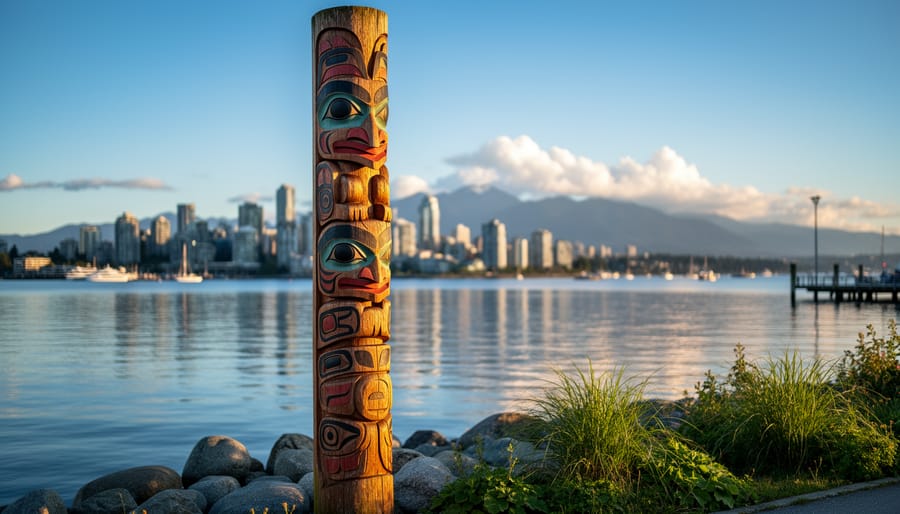
Long before Vancouver appeared on any map, these lands knew other names, Musqueam, Squamish, and Tsleil-Waututh territories where stories carved valleys, named mountains, and explained the relationship between people, water, and forest. These Coast Salish narratives aren’t historical footnotes. They’re the foundational layer of Vancouver’s cultural identity, older than the city by thousands of years and still actively shaping how we understand this place.
The very geography tells stories if you know how to read it. The twin peaks locals call “The Lions” are the Squamish sisters transformed to stone in a story of peace between nations. Stanley Park’s Siwash Rock stands as a testament to selflessness in Squamish tradition. Even the name “Vancouver” overlays the Squamish name “Xwmélch’tstn” (Homulcheson), a village site occupied for millennia before contact. Walking through the city means moving through layered narratives where Indigenous place names and creation stories anchor the landscape in meaning that predates colonial history.
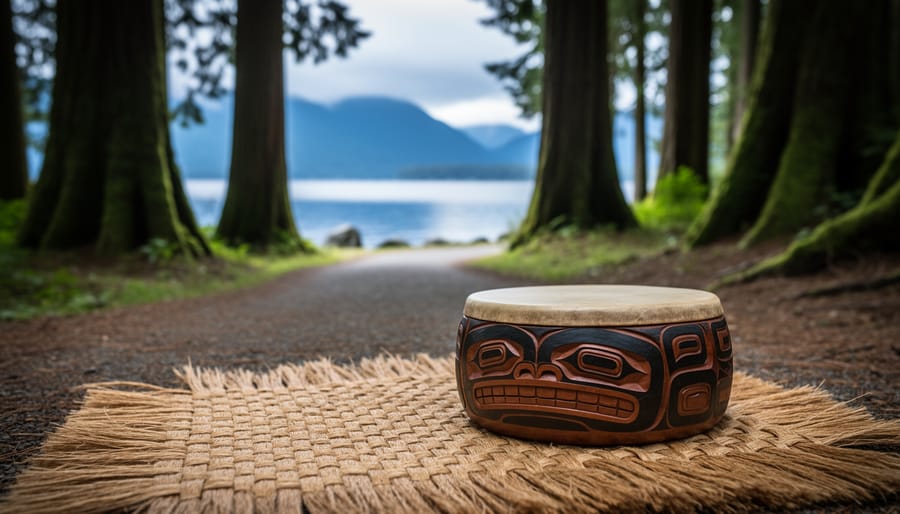
You’ll find these foundational narratives most powerfully presented at the Museum of Anthropology on UBC’s campus, where the Great Hall’s floor-to-ceiling windows frame contemporary Coast Salish art against the mountains and waters that inspired the stories. The Musqueam teaching house on-site offers programs led by community members who share oral histories in their own voices. Downtown, the Bill Reid Gallery focuses on Haida art but contextualizes how Northwest Coast storytelling traditions interconnect across nations.
Public art increasingly makes these narratives visible throughout the city. The welcoming figures outside the Vancouver Convention Centre, Susan Point’s monumental “People Amongst the People” installation at Vancouver International Airport, and the transforming killer whale sculptures at the Vancouver Aquarium all draw from specific stories with deep cultural significance. The recently opened šxʷƛ̓ənəq Xwtl’e7énḵ Square (formerly the Vancouver Art Gallery’s north plaza) incorporates Musqueam and Squamish place-based narratives into its very design.
For direct engagement, consider visiting the Squamish Lil’wat Cultural Centre when you head to Whistler, or attend one of the regular storytelling events at the Museum of Vancouver. The Talking Stick Festival, held each February, brings Indigenous performing artists from across the continent to share contemporary interpretations of traditional narratives. These aren’t artifacts behind glass, they’re living stories still being told, still shaping identity, still defining what this place means.
Immigration Waves and Neighborhood Storytelling
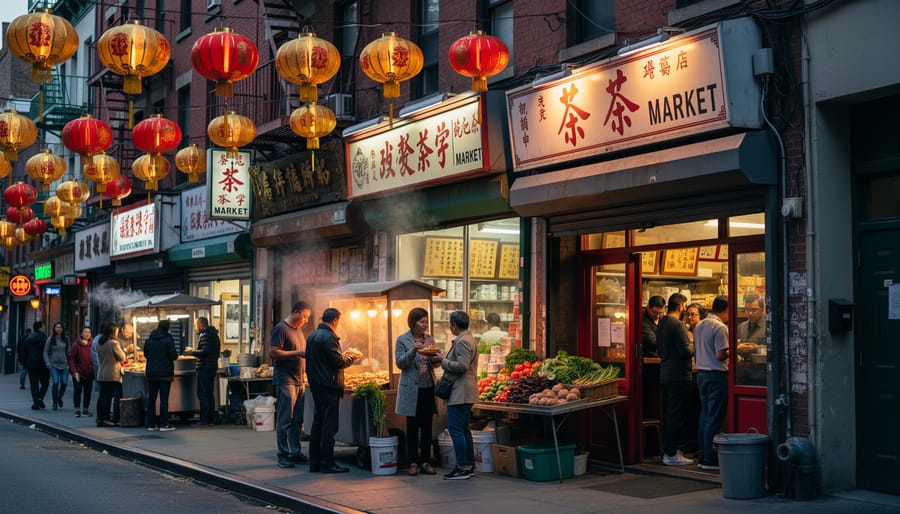
Vancouver’s neighborhoods read like chapters in an immigration story that began long before the city’s 1886 incorporation. Each wave of newcomers layered new narratives onto the urban landscape, creating districts where architecture, commerce, and community traditions tell stories that official histories often overlook.
Chinatown holds the city’s oldest continuous immigrant narrative. Established in the 1880s when Chinese workers arrived to build the railway, the neighborhood’s narrow streets and heritage buildings preserve stories of exclusion and resilience. The Chinese Canadian Museum, housed in the 1902 Wing Sang Building, contextualizes personal accounts, handwritten letters, family photographs, head tax certificates, within the broader sweep of discriminatory legislation and eventual community triumph. Walking these blocks during any season reveals narrative layers: ornate balconies on Pender Street speak to architectural traditions maintained despite the 1923 Exclusion Act, while Dr. Sun Yat-Sen Classical Chinese Garden offers a physical manifestation of cultural memory transplanted and carefully tended.
A few kilometers east, Punjabi Market along Main Street and 49th Avenue chronicles a different timeline. South Asian immigration accelerated post-1967 when immigration policies shifted from racial quotas to points-based systems. The neighborhood’s evolution appears in family-run fabric shops, sari stores unchanged since the 1970s, and restaurants where recipes preserve village cooking techniques from specific Punjabi regions. The annual Vaisakhi parade here, one of North America’s largest, transforms streets into a living narrative of Sikh heritage and contemporary Canadian identity.
Little Italy on Commercial Drive tells transformation through successive occupations. Italian immigrants from Calabria and Molise arrived in the 1950s and 60s, establishing cafes and bakeries. By the 1990s, the neighborhood absorbed Latin American refugees and later, young artists. Heritage Italian businesses persist as narrative anchors, Caffè Calabria’s vintage espresso machine and black-and-white family photos document continuity, while newer Brazilian cafes and Salvadoran pupuserias add chapters to an ongoing story.
Recent arrivals shape emerging narratives in neighborhoods like Joyce-Collingwood, where Iranian bakeries and Filipino restaurants cluster, each preserving specific regional food traditions as cultural storytelling. These spaces function as unofficial heritage centers where language, ritual, and shared memory survive displacement.
Experience these narratives by walking slowly, visiting during community festivals when streets close for celebrations, and patronizing businesses where second-generation owners still know their grandparents’ arrival stories.
Where Personal Stories Become Public: Museums, Galleries, and Cultural Spaces
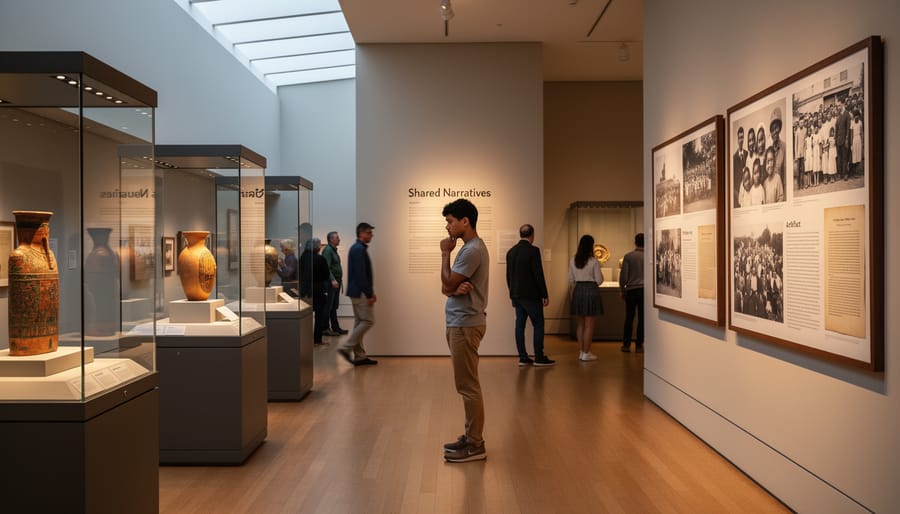
Vancouver’s cultural institutions serve as amplifiers for individual stories, transforming private memories into shared public heritage. The Museum of Anthropology at UBC stands as the city’s most profound space for encountering Indigenous narratives, where Coast Salish cedar boxes and regalia tell creation stories alongside contemporary Indigenous art challenging colonial perspectives. The Bill Reid Rotunda houses monumental works that bridge ancient storytelling traditions with modern artistic expression. Visit midweek mornings for quieter contemplation, and don’t miss the Multiversity Galleries where storage becomes display, revealing thousands of objects with their accompanying stories.
| Institution | Primary Narrative Focus | Must-Experience Collection | Insider Tip |
|---|---|---|---|
| Museum of Anthropology | Indigenous heritage and contemporary perspectives | Bill Reid Gallery and Multiversity Galleries | Free admission Tuesday evenings 5-9pm |
| Museum of Vancouver | City evolution through layered community stories | c̓əsnaʔəm exhibit and immigration galleries | Rooftop views complement narrative context |
| Chinese Canadian Museum | Chinese diaspora experiences and contributions | Chinatown history and personal family artifacts | Combined ticket with Chinatown storytelling tour |
| Polygon Gallery | Contemporary visual storytelling and photography | Rotating exhibits on urban identity | Stunning waterfront location enhances visits |
The Museum of Vancouver excels at weaving together contradictory narratives. Its c̓əsnaʔəm exhibit reveals how a Coast Salish village existed where Vanier Park stands today, while immigration galleries upstairs show how newcomers perceived Vancouver as empty wilderness ready for settlement. This tension illustrates how cultural narratives compete and coexist rather than forming a single coherent story.
The Chinese Canadian Museum in Chinatown’s Wing Sang Building occupies the neighborhood’s oldest structure, where the architecture itself narrates exclusion and resilience. Personal letters, business ledgers, and family photographs transform abstract concepts like the head tax into tangible human experiences. The museum runs quarterly storytelling circles where elders share memories directly with visitors, creating living narrative encounters that no static exhibit can match.
Contemporary galleries like the Polygon in North Vancouver and Capture Photography Festival venues showcase how current artists reinterpret cultural narratives through modern lenses. These spaces demonstrate that storytelling never stops evolving. The rental bike stations near most museums make cultural institution-hopping practical, though the SeaBus to Polygon Gallery offers the most scenic narrative journey.
Living Narratives: Festivals, Food, and Daily Cultural Expression
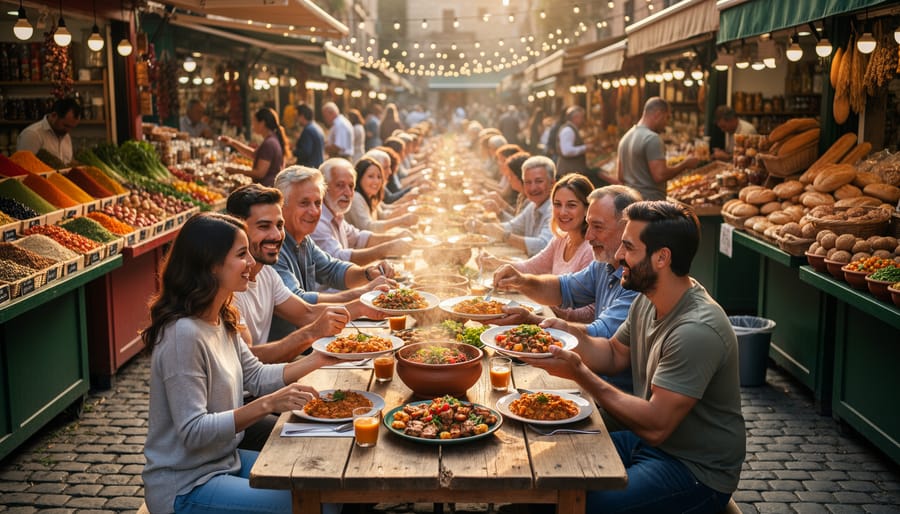
Vancouver’s cultural narratives don’t just live in museums, they pulse through the city’s streets during festivals, simmer in restaurant kitchens, and unfold in daily community gatherings. These living expressions offer the most accessible entry points into the city’s diverse stories.
The festival calendar reads like a cultural roadmap. January’s Lunar New Year transforms Chinatown with lion dances and firecrackers, telling stories of resilience and renewal that Chinese, Vietnamese, and Korean communities have carried across generations. Come October, South Vancouver’s Punjabi Market area glows with Diwali lights while families share sweets that taste the same as those made thousands of miles away, taste memory bridging continents. Italian Day on Commercial Drive each June brings nonna’s recipes to street-side grills, turning the Drive into a multi-generational storytelling session where food becomes conversation.
But seasonal celebrations only scratch the surface. Walk through Granville Island Public Market any weekday and you’ll find cultural narratives in every vendor conversation. The Filipino bakery selling ube pastries, the Japanese fishmonger explaining seasonal catches, the Ukrainian deli counter where regulars order in their parents’ language, these daily exchanges preserve stories that might otherwise disappear between generations.
Restaurants function as narrative archives. A Persian café in North Vancouver serves tea the traditional way while photos of pre-revolution Tehran hang nearby. Korean restaurants along Robson showcase regional dishes that carry specific provincial histories. Indigenous-owned Salmon n’ Bannock offers more than Coast Salish-inspired cuisine; staff share food sovereignty stories and traditional harvesting knowledge with every meal explanation.
The best time to experience these living narratives? Year-round, honestly. While summer brings concentrated festival energy (Caribbean Days, Powell Street Festival, Greek Day), winter offers quieter cultural depth, think Persian New Year preparations in March or the Japanese New Year traditions at Buddhist temples in early January. Food narratives flow continuously: farmers markets from April through October feature immigrant farmers growing heritage crops, turning agriculture into cultural preservation. Even grabbing coffee at a Vietnamese café on Kingsway or dim sum in Richmond becomes a small act of engaging with ongoing cultural stories, not historical ones frozen in time.
Urban Landscapes as Narrative Texts
Vancouver’s streets, buildings, and public spaces function as an open-air archive of cultural memory. You don’t need a museum ticket to read these stories, they’re written into brick facades, painted on alley walls, and embedded in plaza designs throughout the city.
Start with Chinatown’s heritage architecture, where recessed balconies and decorative tilework reflect Southern Chinese building traditions adapted to Canadian building codes. The Sam Kee Building on Pender Street, the world’s narrowest commercial building, tells a story of resilience and creative problem-solving when discriminatory policies limited Chinese property ownership. A few blocks away, the Chinese Cultural Centre’s classical garden architecture speaks to cultural preservation efforts decades in the making.
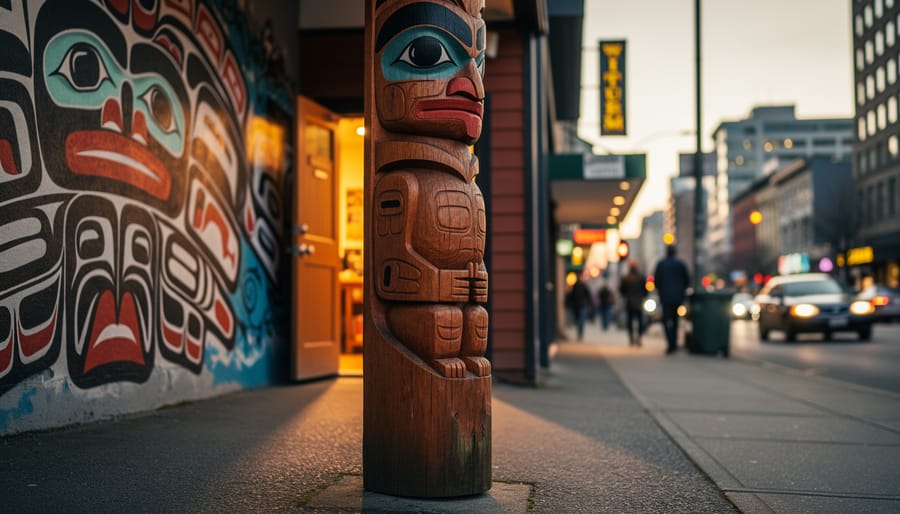
Public art installations across Vancouver make invisible histories visible. The A-maze-ing Laughter sculptures at English Bay celebrate joy and community gathering, but look closer at neighbourhood murals for deeper narratives. The Coast Salish welcome figures at Vancouver International Airport, the Inukshuk at English Bay, and cedar carvings throughout Stanley Park ground the city in its Indigenous foundations before European contact.
I stumbled onto one of my favourite narrative moments walking through an unremarkable stretch of Commercial Drive. Between a bakery and a laundromat, a faded mural depicted Italian immigrant workers building the neighbourhood in the 1950s, complete with period clothing and hand-lettered shop names I’d passed without noticing they still existed a block away.
For self-guided exploration, the seawall offers layered storytelling through public art, historical markers, and changing architectural styles from Coal Harbour to Kitsilano. Combine these waterfront adventures with deliberate detours into South Main’s evolving streetscape or Punjabi Market’s shifting commercial signage to trace how neighbourhoods narrate their own transformations. Download the VanMap app to locate heritage plaques, or simply walk slowly with curiosity, the best stories reveal themselves to patient observers willing to look beyond the obvious.
How to Engage With Vancouver’s Cultural Narratives as a Visitor
Start with community-led experiences rather than generic bus tours. The best cultural narratives emerge when you’re guided by people whose families lived the stories, book heritage walks through the Chinese Canadian Museum, join Talaysay Tours for Indigenous perspectives on Stanley Park, or attend storytelling nights at the Roundhouse Community Arts Centre. These experiences transform abstract history into personal memory.
Transportation choices matter for authentic encounters. Skip the tour bus and use TransLink to reach neighborhoods the way residents do, the 99 B-Line connects Commercial Drive’s Italian heritage to UBC’s Museum of Anthropology, while the Canada Link offers frequent service to Richmond’s Asian cultural centers. Planning car-free day trips by transit forces you to slow down and notice details you’d miss from a car window. During major festivals, check transit schedules early; Canada Day transit patterns differ from regular service, affecting access to cultural events across the region.
Support businesses that preserve cultural memory. Eat at family-run restaurants where recipes carry immigration stories, shop at cultural grocers rather than chain stores, and attend performances at neighborhood cultural centers instead of only downtown venues. The Punjabi Market’s sweet shops, Chinatown’s herbalists, and Little Italy’s bakeries aren’t just commercial spaces, they’re narrative archives where owners share family histories if you ask respectfully.
Insider tip: Wednesday evenings at the Museum of Anthropology offer quieter visits with better opportunities for meaningful conversations with Indigenous cultural ambassadors. Arrive an hour before closing when tour groups have left.
Common Questions About Exploring Cultural Narratives in Vancouver
Which neighborhoods best represent diverse cultural narratives?
Chinatown, Punjabi Market, Commercial Drive, and Granville Island each offer distinct layers of cultural storytelling, while Musqueam, Squamish, and Tsleil-Waututh territories encompass the entire region with Indigenous narratives. Walking through these areas reveals stories through architecture, businesses, public art, and community gathering spaces that reflect different waves of settlement and cultural preservation.
How can I learn about Indigenous narratives respectfully?
Start with Indigenous-led experiences like tours at the Museum of Anthropology, cultural programs at Squamish Lil’wat Cultural Centre, or walking tours guided by First Nations storytellers. Approach with humility, listen more than you speak, avoid treating cultural sites as photo backdrops, and support Indigenous artists and businesses directly rather than purchasing knock-off “Indigenous-style” souvenirs.
What festivals best showcase immigrant cultural heritage?
The Lunar New Year celebrations in Chinatown and Richmond, Vaisakhi Parade in South Vancouver, Italian Day on Commercial Drive, and Diwali festivities across multiple neighborhoods each bring specific cultural narratives to life through food, performances, and community participation. These events happen throughout the year, so check community calendars before visiting.
When is the best time to experience cultural narratives?
Year-round engagement works because cultural narratives live in everyday spaces, though summer and early fall pack the most festivals into concentrated months. Canada Day in early July combines national celebration with diverse cultural expressions, and having getting around Canada Day sorted helps you reach different neighborhood celebrations efficiently.
Beyond formal tours and festivals, casual conversations reveal unexpected narratives. I’ve discovered family immigration stories while waiting for takeout in East Vancouver, learned about early Italian settlers from a barista on the Drive, and heard Cantonese opera history from a shop owner in Chinatown. Cultural narratives emerge organically when you slow down, ask genuine questions, and show interest in people’s connections to place. Transit makes spontaneous cultural exploration practical, brush up on public transit tips before heading out, since narrative-rich neighborhoods often sit beyond the downtown core and parking proves challenging in heritage districts where stories concentrate most densely.
Vancouver’s cultural narratives are still being written, and you’re part of the story. Every conversation with a shop owner in Punjabi Market, every pause at a Coast Salish art installation, every meal shared at a family-run restaurant adds your experience to the city’s ongoing tapestry. These aren’t preserved artifacts behind glass, they’re living traditions that shift with each person who engages with them.
The city’s identity emerges from millions of small moments: a grandmother teaching her grandchild Cantonese in a park, a mural appearing overnight in an alley, a new cultural festival launching in a neighborhood. You witness and contribute to this evolution simply by showing up with curiosity and respect.
Here’s my final insider tip: the best narrative discoveries happen when you’re slightly lost or off-schedule. That unplanned detour through a residential street might reveal a community garden with heritage plantings. The coffee shop you ducked into during rain might display photographs telling a migration story. The bus route you took by mistake might pass through a neighborhood celebrating a cultural holiday you’d never heard of.
Stay open to these moments. Vancouver’s stories find you when you’re ready to listen.